Shandong Fengtu IOT Technology Co., Ltd
Sales Manager:Ms. Emily Wang
Cel,Whatsapp,Wechat:+86 15898932201
Email:info@fengtutec.com
Add:No. 155 Optoelectronic Industry Accelerator, Gaoxin District, Weifang, Shandong, China


Sales Manager:Ms. Emily Wang
Cel,Whatsapp,Wechat:+86 15898932201
Email:info@fengtutec.com
Add:No. 155 Optoelectronic Industry Accelerator, Gaoxin District, Weifang, Shandong, China
time:2025-05-19 09:56:00 source:Weather Station viewed:866 time
The pH value of water is a critical indicator for measuring the acidity and alkalinity of water bodies, ranging from 0 to 14. A pH of 7 is neutral, below 7 is acidic, and above 7 is alkaline. In natural water bodies, pH affects the survival and reproduction of aquatic organisms. For example, fish typically thrive in water with a pH between 6.5 and 8.5. Outside this range, physiological processes such as enzyme activity and respiration in aquatic organisms are inhibited, and in severe cases, it can lead to death. In industrial production, wastewater treatment in industries such as electroplating and dyeing, as well as production processes in food and beverage and pharmaceutical industries, have strict requirements for water pH. Improper pH values can affect product quality and even cause equipment corrosion.
Traditional manual methods for detecting water pH have issues such as low detection frequency and poor timeliness, making them difficult to meet real-time monitoring needs. A pH Analyzer can continuously and automatically monitor the acidity and alkalinity of water bodies. The instrument mainly consists of a sensor, a transmitter, and a display controller. The sensor converts the hydrogen ion concentration in water into an electrical signal through a glass electrode and a reference electrode, and finally, the display controller displays the pH value in real time.
In practical applications, pH Analyzers are widely used in wastewater treatment plants to help staff monitor the acidity and alkalinity of wastewater in treatment tanks in real time and adjust treatment processes promptly. At drinking water sources, they can continuously monitor the pH value of water sources to ensure the safety of residents' drinking water. In industrial circulating water systems, real-time monitoring of pH values helps prevent pipeline scaling, corrosion, and other issues caused by abnormal water acidity or alkalinity.
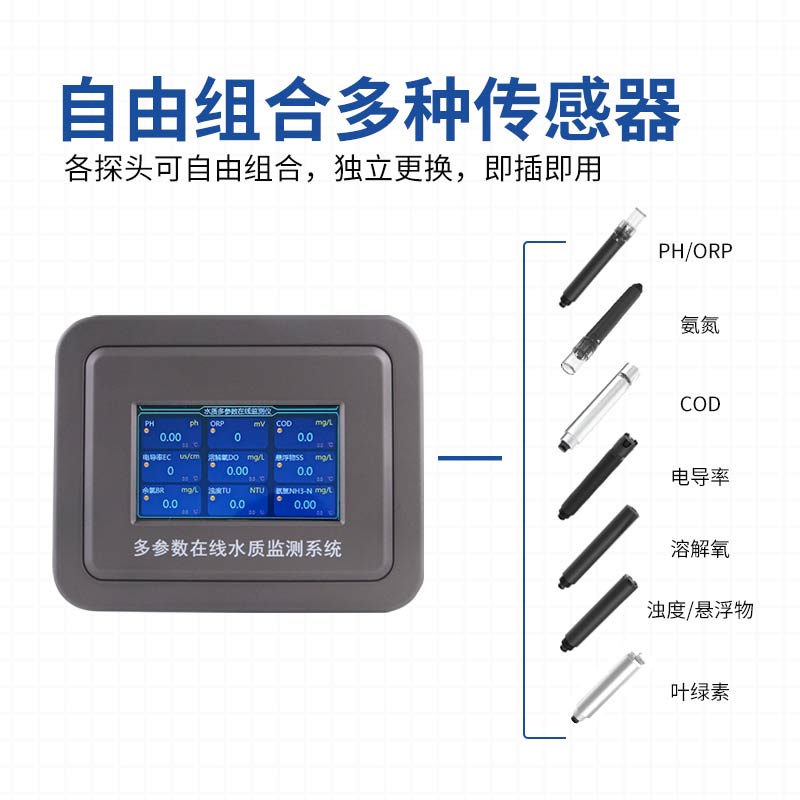
In the current context where water resource protection is becoming increasingly important, the Online Multi - parameter Water Quality Analyzer is widely used in water quality monitoring work due to its two major advantages of "online rapid detection" and "low cost".Traditional wa...
Mining operations are like a double-edged sword: while fueling economic growth, they leave behind environmental challenges, with slope instability and soil erosion being the most pressing. Mountain landslides are no trivial matter—accidents such as equipment burial and worker entrapment occur frequ...
What is a measurement terminal RTU? Before understanding it, let's understand what RTU is.RTU, abbreviation of Remote terminal unit, means: "Remote terminal unit", also called "Remote telemetry unit". This is a microprocessor-based control device, whose most obvious feature i...
Atmospheric environment monitoring system is a technological platform for real-time online monitoring of regional air quality. It provides continuous 24-hour automatic monitoring of multiple parameters, including PM2.5, PM10, CO, NO2, SO2, O3, wind speed, and temperature....


 Skype
Skype
 whatsapp
 mail
mail