Shandong Fengtu IOT Technology Co., Ltd
Sales Manager:Ms. Emily Wang
Cel,Whatsapp,Wechat:+86 15898932201
Email:info@fengtutec.com
Add:No. 155 Optoelectronic Industry Accelerator, Gaoxin District, Weifang, Shandong, China


Sales Manager:Ms. Emily Wang
Cel,Whatsapp,Wechat:+86 15898932201
Email:info@fengtutec.com
Add:No. 155 Optoelectronic Industry Accelerator, Gaoxin District, Weifang, Shandong, China
time:2025-05-16 09:30:05 source:Weather Station viewed:570 time
In the context of rapid industrialization and urbanization, air pollution has become an increasingly severe issue and a global focus. Among the main air pollutants, the "four gases" (sulfur dioxide, nitrogen dioxide, carbon monoxide, ozone) and "two dusts" (PM2.5, PM10) pose significant hazards to human health and the ecological environment. Prolonged exposure to environments filled with these pollutants significantly increases the risk of respiratory and cardiovascular diseases, while also severely disrupting ecological balance.
Traditional national control point monitoring systems for ambient air have played an important role in addressing air pollution. However, with the growing complexity of pollution, their drawbacks have become evident. Limited in number and unevenly distributed, national control points struggle to comprehensively reflect air quality in all urban areas. High monitoring costs and difficult maintenance restrict their large-scale promotion and application. Additionally, their data lacks timeliness, and the "point-representing-surface" monitoring approach fails to meet the needs of refined management, falling short in deep functions such as spatio-temporal trend analysis and pollution reduction assessment. Against this backdrop, a new and more efficient air quality monitoring solution — the Air Quality Monitoring Station — has emerged.
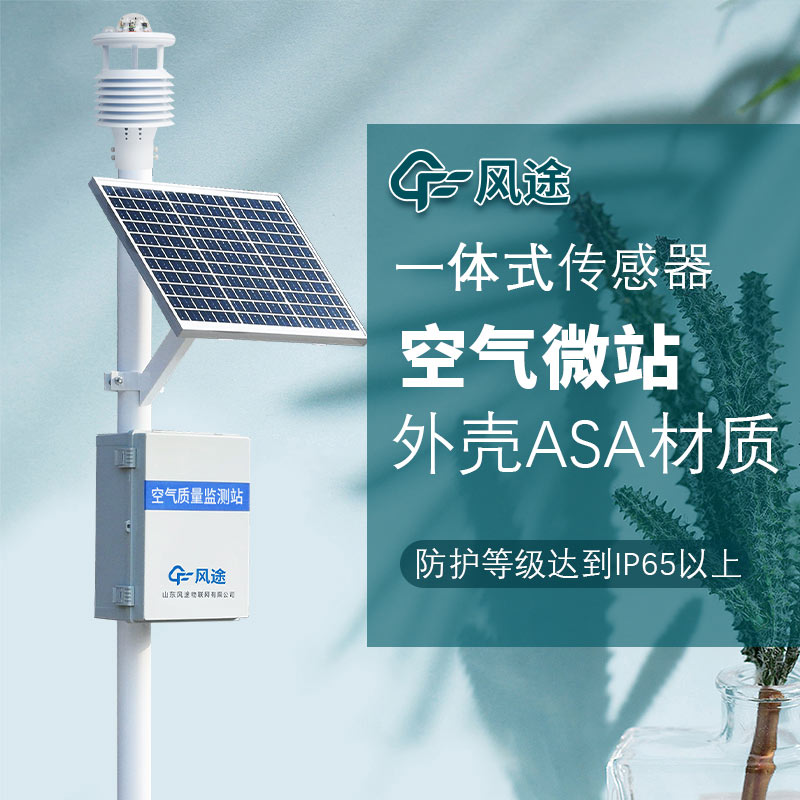
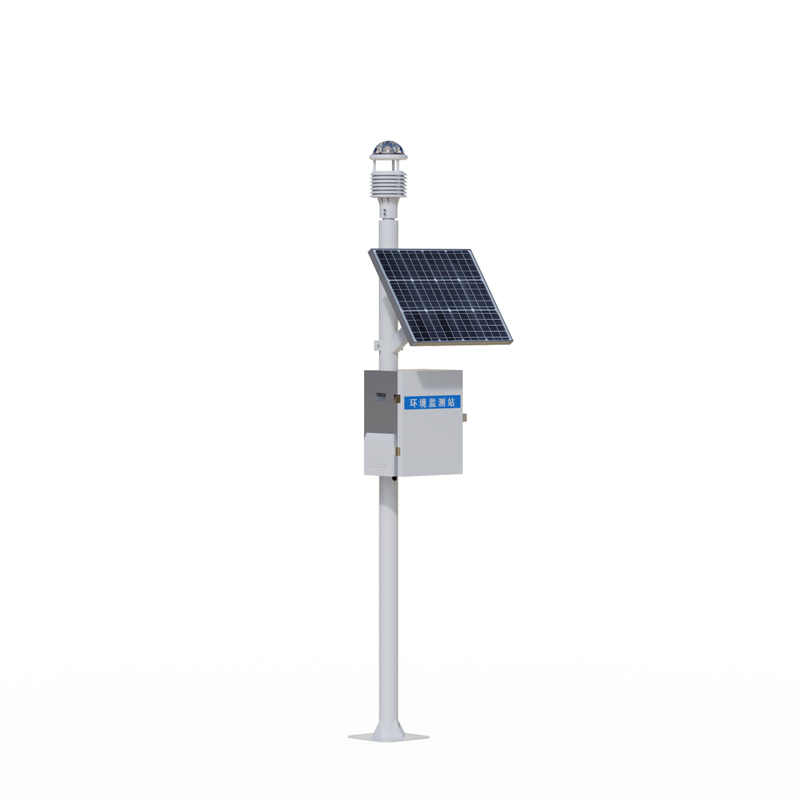
Air Quality Monitoring Stations are compact and easy to deploy flexibly in various locations, including urban streets, residential communities, industrial parks, schools, and hospitals, enabling precise monitoring of air quality in micro-regions. The system integrates multiple high-precision sensors to simultaneously monitor real-time concentrations of pollutants such as sulfur dioxide, nitrogen dioxide, carbon monoxide, ozone, PM2.5, and PM10, while also collecting meteorological parameters like temperature, humidity, wind speed, and wind direction to provide rich data support for comprehensive air quality analysis.
The system features efficient data collection and transmission. Through wireless communication technologies, monitoring data can be real-time uploaded to cloud servers or local terminals, allowing users to view air quality information anytime, anywhere via devices such as computers and mobile phones. It also has an intelligent early-warning function: once pollutant concentrations exceed preset thresholds, it immediately issues alerts to remind relevant departments and personnel to take timely countermeasures.
soil sensors are used to monitor soil moisture conditions. They provide information on soil moisture, salinity, temperature, etc. They are suitable for horticulture, agriculture, indoor and outdoor plants....
Meteorological monitoring technologies are becoming increasingly indispensable in contemporary society with the increasing emphasis on rural development, agricultural progress and ecological protection. Especially in the environmental monitoring of rural streets, the integrated ultrasonic sensing te...
Soil is the bedrock of crop growth, providing water, nutrients, and other key resources. Five major factors - matrices, climate, biology, topography and time - shape the characteristics of soil. A soil census is a comprehensive examination of the condition of soils, which is essential for ensuring f...
Rainfall and water level are important factors affecting reservoir safety. As an indispensable part of rainfall observation system, automatic rainfall level monitoring station plays a very important role in flood prevention. There are some problems in the traditional hydrological forecasting methods...


 Skype
Skype
 whatsapp
 mail
mail