Shandong Fengtu IOT Technology Co., Ltd
Sales Manager:Ms. Emily Wang
Cel,Whatsapp,Wechat:+86 15898932201
Email:info@fengtutec.com
Add:No. 155 Optoelectronic Industry Accelerator, Gaoxin District, Weifang, Shandong, China


Sales Manager:Ms. Emily Wang
Cel,Whatsapp,Wechat:+86 15898932201
Email:info@fengtutec.com
Add:No. 155 Optoelectronic Industry Accelerator, Gaoxin District, Weifang, Shandong, China
time:2025-05-21 09:29:20 source:Weather Station viewed:683 time
Industrial boilers are devices used to heat water into steam, which can be employed to drive turbines for power generation, provide heat sources for production workshops, and so on. If the hardness of boiler water is high, calcium and magnesium ions in the water will form scale on the heating surface of the boiler. This will lead to a reduction in heat transfer efficiency, an increase in boiler fuel consumption, and may also cause local overheating, even serious safety accidents such as boiler tube bursting. It will also aggravate the corrosion of the boiler and shorten its service life. Therefore, measuring the hardness of industrial boiler water is conducive to ensuring the safe operation of the boiler, reducing energy consumption, and prolonging the service life of the equipment.
The main measurement methods for water quality hardness include colorimetry, titration, and ion-selective electrode method. The colorimetry method involves adding a specific color-developing agent to the water sample. The color-developing agent reacts with calcium and magnesium ions in the water to form a colored compound. Then, a spectrophotometer is used to measure its absorbance, and the hardness value of the water sample is determined according to the corresponding relationship between the absorbance and the hardness concentration. The titration method uses complexometric titrants such as EDTA to carry out complexation reactions with calcium and magnesium ions in the water. The titration end point is determined through the abrupt change of the indicator's color, so as to calculate the hardness of the water sample. The ion-selective electrode method uses electrodes that have a selective response to calcium and magnesium ions to measure the potential change of the electrodes in the water sample and calculate the hardness of the water sample.
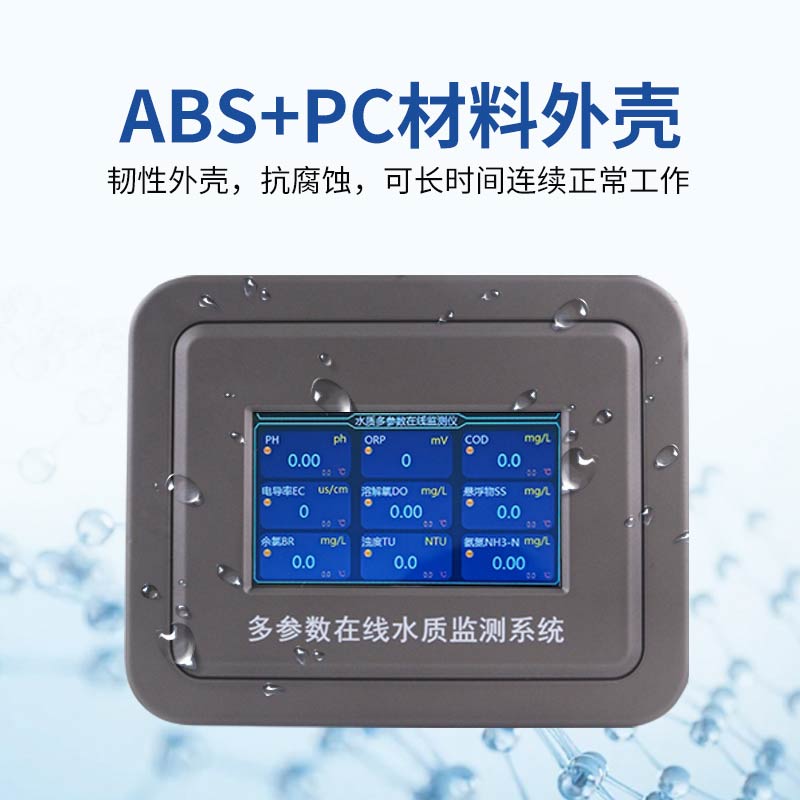
The FT - GL02 Water Hardness Meter is an instrument capable of online monitoring of total water hardness and chloride ions. It integrates water hardness sensors, chloride ion sensors, and measurement module communication storage, and can quickly and accurately record key parameters in water bodies.
Here are its advantages:
Suitable for long - term work in field environments, with stable measurement and strong anti - interference ability.
Each probe can be freely combined and independently replaced, and is plug - and - play.
Supports the expansion of water quality multi - parameter sensors, such as pH value, dissolved oxygen, conductivity, turbidity, temperature, ammonia nitrogen and other sensors, which can be combined and configured according to different needs and applications.
Can be used for on - site rapid determination, emergency monitoring, as well as long - term online monitoring of groundwater, river water, lake water sources, urban pipeline water, etc.
Made of ABS+PC materials, anti - corrosion, and can work continuously and normally for a long time.
Can be installed in occasions with small sizes.
The RS485 interface supports the MODBUS - RTU communication protocol, making it convenient to connect with equipment such as PLC, DCS, configuration software, and DTU for data transmission.
Hydrological Telemetry Rain Gauge Station Equipment utilizes a stainless steel rainfall sensor with a measurement range of 0–4 mm/min and an accuracy of ±0.2 mm. It transmits rainfall data to a monitoring platform via wireless remote transmission, automatically compiling daily, weekly, month...
Soil moisture conditions, often referred to as soil moisture, are critical to agricultural production. Soil moisture is directly related to the growing conditions of crops and is one of the key environmental factors that determine the health of crops.Knowing the exact level of soil moisture and its...
As the air quality problem becomes increasingly serious, real-time monitoring of air quality is particularly important. By building micro-monitoring stations, we can achieve real-time monitoring of air quality and timely detection of sources of pollution in the atmosphere. The application of this te...
Landslide monitoring equipment, as an important tool for ensuring geological safety, can monitor the characteristics of landslide masses and related environmental factors, providing crucial data for analyzing landslide risks.Displacement monitoring equipment: The GNSS monitoring system utilizes the...


 Skype
Skype
 whatsapp
 mail
mail