Shandong Fengtu IOT Technology Co., Ltd
Sales Manager:Ms. Emily Wang
Cel,Whatsapp,Wechat:+86 15898932201
Email:info@fengtutec.com
Add:No. 155 Optoelectronic Industry Accelerator, Gaoxin District, Weifang, Shandong, China


Sales Manager:Ms. Emily Wang
Cel,Whatsapp,Wechat:+86 15898932201
Email:info@fengtutec.com
Add:No. 155 Optoelectronic Industry Accelerator, Gaoxin District, Weifang, Shandong, China
time:2026-04-17 10:20:59 source:Weather Station viewed:206 time
Wind Speed Gauge utilizes an integrated two-parameter sensor to provide all-weather monitoring of wind speed and direction data. The device detects airflow conditions by emitting continuous, variable-frequency ultrasonic signals and measuring the resulting relative phase shifts. It offers a wind speed measurement range of 0 to 60 m/s and provides full 360-degree coverage for wind direction. Featuring a built-in microprocessor, the system automatically compensates for temperature effects; furthermore, as it contains no mechanical moving parts, it operates maintenance-free, making it suitable for applications in meteorology, environmental protection, agriculture, industry, and urban planning.
Wind Speed Gauge is an automated meteorological observation system designed for the real-time measurement of wind speed and direction. Its core component is an integrated two-parameter sensor that consolidates the monitoring functions for both wind speed and direction into a single module. The device operates based on the ultrasonic time-of-flight principle: by emitting continuous, variable-frequency ultrasonic signals, it measures the phase shifts of these signals as they propagate through the air to derive the airflow velocity. When the direction of ultrasonic propagation aligns with the wind direction, the signal's speed increases; conversely, when opposed to the wind, its speed decreases. The microprocessor analyzes the time-difference data between signals traveling in opposing directions and applies built-in algorithms to automatically correct for the influence of temperature on the speed of sound, ultimately outputting highly accurate values for wind speed and direction.
In terms of technical specifications, the wind speed monitoring range spans 0 to 60 m/s with a resolution of 0.01 m/s, while the wind direction measurement range covers 0 to 360 degrees with a resolution of 1 degree. Compared to traditional mechanical anemometers, the ultrasonic Wind Speed Gauge contains no rotating parts, thereby eliminating the issues of mechanical wear associated with wind cups and wind vanes. Furthermore, it is free from "startup wind speed" limitations, allowing it to function reliably even under low-wind or completely calm (zero wind speed) conditions. Since it lacks mechanical components subject to wear, the device requires neither periodic maintenance nor on-site calibration, ensuring stable, all-weather operation with a service life exceeding ten years.
The application scope of Wind Speed Gauge extends across various fields, including meteorology, environmental protection, agriculture, industry, and urban planning. In the meteorological sector, the device can be installed at automated regional weather stations to provide foundational observational data for weather forecasting and climate research. In the field of environmental protection, it is utilized for urban environmental monitoring and air quality assessment. In the agricultural sector, this device assists farmers in understanding wind speed conditions across their fields, providing decision-making support for crop spraying operations and greenhouse ventilation control. In the industrial sector, the equipment can be deployed in environments with strict explosion-proof requirements—such as petrochemical complexes and coal mine shafts—to monitor wind speed fluctuations in real time, thereby providing critical data for ventilation system control and fire early warning systems. In the construction sector, the device is utilized for monitoring wind loads on high-rise buildings and for managing operational safety at construction sites.
The Wind Speed Gauge is compatible with the Modbus RTU protocol, allowing for the real-time viewing of monitoring data via a remote cloud platform. With a power consumption of less than 5W, the device is compatible with solar power systems, making it ideally suited for remote field sites where access to mains electricity is unavailable. These features enable the ultrasonic Wind Speed Gauge to withstand a wide range of harsh environments—from deserts and polar regions to marine settings—effectively meeting the wind speed and direction monitoring requirements of various specialized applications.
Various methods have long been used to regulate soil moisture to ensure proper crop growth. To know the soil moisture content, apart from relying on experience, a soil moisture monitoring system is now more commonly used. This system measures soil moisture, temperature and other parameters in real t...
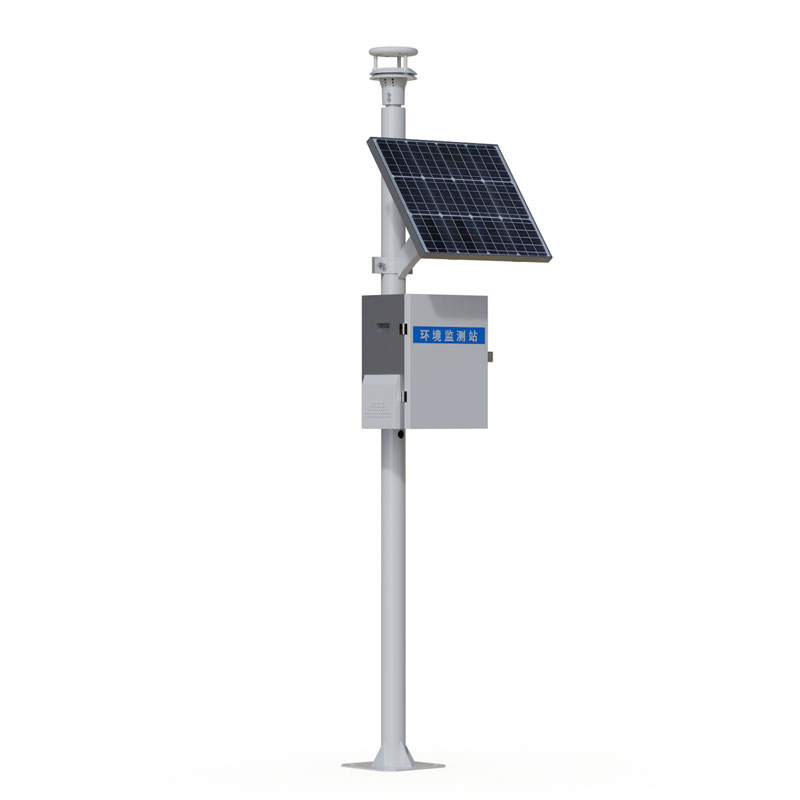
The establishment and use of automatic weather station, Windway Technology automatic weather station is a multi-factor weather station, which can operate normally all day long under unattended and harsh environment. It consists of two major parts: data collection system and communication network, wh...
Radar level meter is a kind of liquid level measurement device using radar technology, which has the following main features:Non-contact measurement: no need to touch the liquid, suitable for dirty or corrosive liquids.Wide measurement range: suitable for liquid level heights from a few centimetres...
After the Beginning of Winter, adverse weather conditions gradually increase, posing great challenges to the safety and smoothness of road traffic operations. Thick fog reduces visibility drastically; continuous rain and snow make the road surface extremely slippery; the arrival of low temperatures...


 Skype
Skype
 whatsapp
 mail
mail