Shandong Fengtu IOT Technology Co., Ltd
Sales Manager:Ms. Emily Wang
Cel,Whatsapp,Wechat:+86 15898932201
Email:info@fengtutec.com
Add:No. 155 Optoelectronic Industry Accelerator, Gaoxin District, Weifang, Shandong, China


Sales Manager:Ms. Emily Wang
Cel,Whatsapp,Wechat:+86 15898932201
Email:info@fengtutec.com
Add:No. 155 Optoelectronic Industry Accelerator, Gaoxin District, Weifang, Shandong, China
time:2026-04-14 09:57:02 source:Weather Station viewed:225 time
Dam settlement monitoring products based on Differential RTK technology achieve a static accuracy of ±2.5 mm + 1 ppm horizontally and ±5 mm + 1 ppm vertically. Equipped with choke-ring antennas and magnetic wave-absorbing materials, these devices support the Modbus-RTU protocol and on-device offline processing, enabling all-weather, automated monitoring of the dam structure.
The operational safety of a dam relies on the continuous monitoring of its structural displacement, with settlement monitoring standing as one of the most critical indicators. Traditional monitoring methods rely on periodic manual measurements, which suffer from limitations such as data latency, insufficient accuracy, and the inability to operate under adverse weather conditions. With the maturation of Differential RTK technology—and the realization of millimeter-level positioning accuracy—automated monitoring products based on this technology are rapidly becoming the mainstream choice for dam safety surveillance.
These Differential RTK-based dam settlement monitoring products boast a static accuracy of ±2.5 mm + 1 ppm in the horizontal plane and ±5 mm + 1 ppm in the vertical plane, enabling them to precisely capture even minute displacement changes on the dam's surface. The devices feature choke-ring antennas and utilize magnetic wave-absorbing materials to effectively suppress signal interference caused by multipath effects, thereby ensuring signal stability and data reliability in complex terrain and aquatic environments. For communication, the products adopt the industrial-standard Modbus-RTU protocol, allowing for seamless integration with existing monitoring systems and data acquisition platforms. Furthermore, the devices support on-board offline processing of displacement data; they can automatically calculate horizontal and vertical displacements locally without relying on real-time computation by a backend server, thereby reducing system deployment costs and minimizing network dependency.
Regarding the monitoring of deep internal displacements within the dam structure, these Differential RTK products can operate in conjunction with internal sensors to establish a multi-dimensional monitoring network—spanning from the surface to the deep interior—that provides a comprehensive overview of the dam's overall deformation trends. The system's all-weather, automated operational capability allows it to continuously collect, process, and report data without the need for human intervention, making it particularly well-suited for safety surveillance in remote regions or during periods of high-water-level operation.
From reservoir dams to tailings dams, and from concrete structures to earth-rock embankments, Differential RTK settlement monitoring products are gradually replacing traditional manual measurement methods. By doing so, they effectively resolve long-standing industry challenges such as insufficient accuracy, operational inefficiency, and susceptibility to human error. More importantly, automated monitoring systems are capable of providing real-time alerts regarding abnormal displacement changes, thereby securing precious time for management authorities to initiate emergency response measures. With the full networking of the BeiDou Navigation Satellite System and the continuous maturation of domestically produced equipment, the cost of Differential RTK technology continues to decline while its performance steadily improves; consequently, dam settlement monitoring is now fully entering a new era characterized by millimeter-level precision, all-weather capability, and full automation.
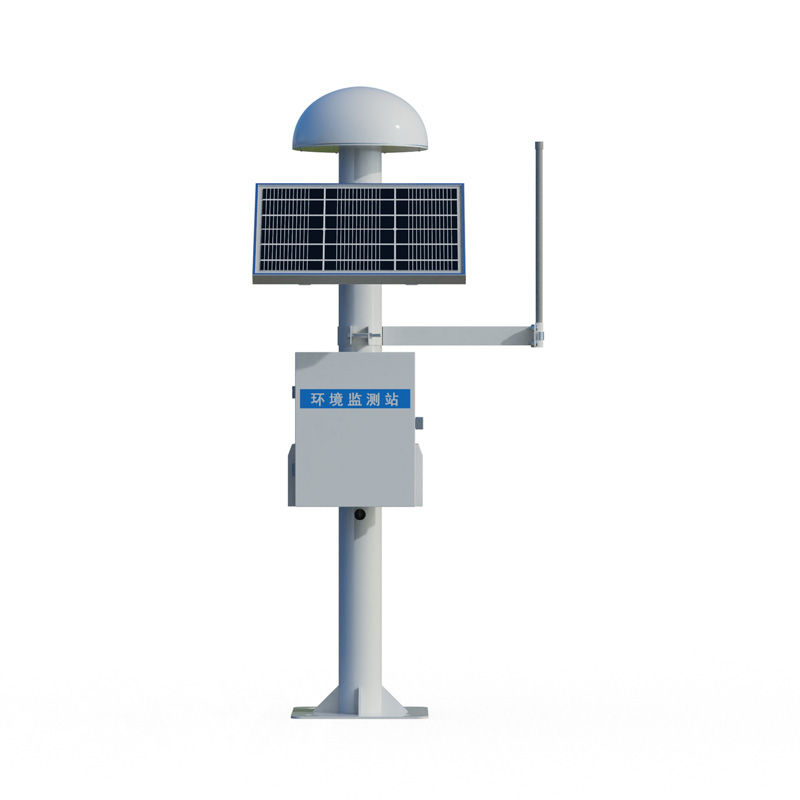
level sensor for water tank is an advanced level sensor for tanks and liquids that accurately measures water levels in large tanks, reservoirs or waterways....
weather measuring tools can measure weather phenomena, including wind speed, wind direction, air temperature, humidity, atmospheric pressure, light, optical rainfall, pm2.5, pm10, noise, etc....
Photovoltaic IV curve testing is a crucial means to evaluate the electrical performance of photovoltaic modules/strings, and the Portable IV Curve Tester is an important tool to achieve this testing.The Portable IV Curve Tester is specifically used to measure the current - voltage relationship of ph...
When facing irresistible natural disasters such as earthquakes and debris flows, accurately locating rescue targets within the crucial golden 72 - hour period becomes the key to racing against the clock and contending with death. At this time, life detectors become an indispensable and powerful assi...


 Skype
Skype
 whatsapp
 mail
mail