Shandong Fengtu IOT Technology Co., Ltd
Sales Manager:Ms. Emily Wang
Cel,Whatsapp,Wechat:+86 15898932201
Email:info@fengtutec.com
Add:No. 155 Optoelectronic Industry Accelerator, Gaoxin District, Weifang, Shandong, China


Sales Manager:Ms. Emily Wang
Cel,Whatsapp,Wechat:+86 15898932201
Email:info@fengtutec.com
Add:No. 155 Optoelectronic Industry Accelerator, Gaoxin District, Weifang, Shandong, China
time:2026-03-27 10:08:51 source:Weather Station viewed:252 time
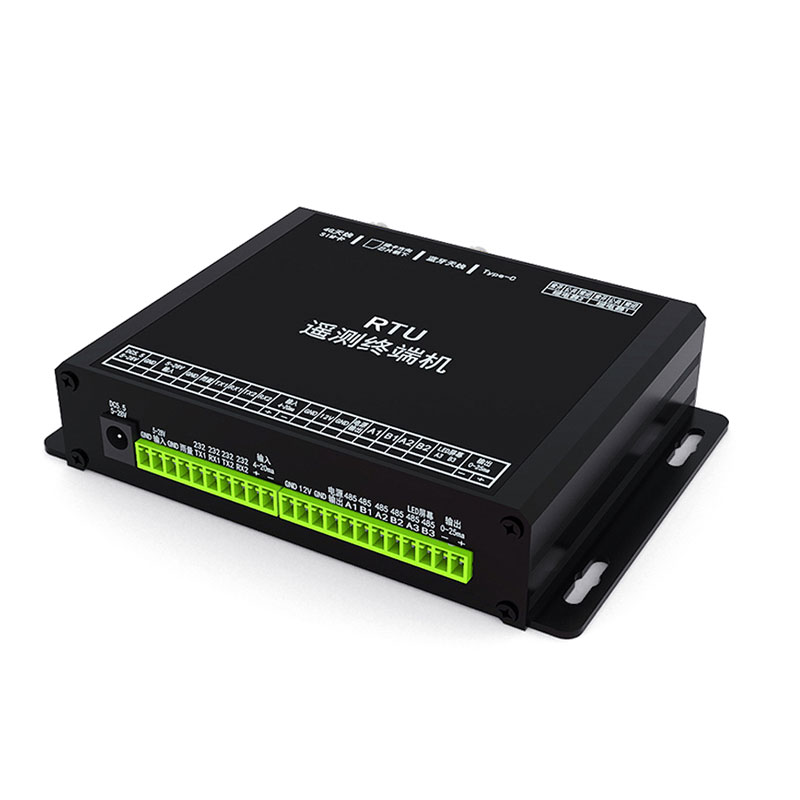
Remote Terminal Unit is a microprocessor-controlled embedded device designed for remote monitoring in fields such as meteorology, hydrology, and geology. It features capabilities for data acquisition, transmission, storage, and remote control, making it suitable for unattended scenarios such as flash flood warning systems and reservoir monitoring.
Remote Terminal Unit is an electronic device centered around a microprocessor, primarily utilized for remote data monitoring and transmission in meteorological, hydrological, and geological applications. The device connects to a central monitoring station—either directly or via a Distributed Control System (DCS) or SCADA system—to form a comprehensive remote monitoring network. The core functions of the RTU include data acquisition, transmission, storage, and remote control, enabling it to operate continuously in unattended environments.
Regarding data acquisition, the RTU can interface with a wide variety of sensors to integrate monitoring functions for water levels, rainfall, meteorological conditions, pest activity, and soil moisture. Depending on the specific application scenario, the device is categorized into several types: Hydrology and Water Resources, Groundwater, Meteorological Station, and Geological Monitoring Station. The Hydrology and Water Resources RTU is typically deployed to monitor water levels and flow rates in rivers and reservoirs; when paired with rainfall sensors, it enables real-time response to heavy rainfall events. The Groundwater RTU is suited for long-term observation of groundwater levels and quality, with data acquisition intervals that can be flexibly configured according to specific requirements. The Meteorological Station RTU works in conjunction with sensors for wind speed and direction, temperature and humidity, atmospheric pressure, and rainfall to establish an automated weather station. Finally, the Geological Monitoring Station RTU is utilized in scenarios such as slope displacement monitoring and debris flow early warning systems, integrating sensors for tilt, vibration, and displacement to conduct surveillance.
In terms of data transmission, the RTU supports multiple communication protocols—including 4G, 5G, NB-IoT, and BeiDou satellite communication—allowing for the selection of primary and backup channels based on local network conditions to ensure data transmission stability. The device features a built-in storage module that automatically saves acquired data in the event of a communication outage; once communication is restored, the stored data is automatically uploaded to prevent any data loss. Furthermore, the remote control functionality enables the central station to perform operations such as parameter configuration, adjustment of acquisition frequencies, and device restarts, thereby significantly reducing the workload associated with on-site maintenance. The Remote Terminal Unit demonstrates high reliability in unattended scenarios. Featuring a low-power design, it supports solar power supply with battery backup, enabling long-term operation in environments lacking access to mains electricity. The complete unit typically possesses characteristics such as water resistance, dust resistance, and tolerance to extreme temperatures, thereby meeting the operational requirements of harsh outdoor environments. In practical applications, RTUs are widely deployed in projects involving flash flood early warning systems, monitoring of small-to-medium-sized reservoirs, irrigation district digitalization, geological hazard monitoring, and ecological environment monitoring. Acting as the core device for front-end data acquisition and transmission, they provide essential data support for remote monitoring and dispatch operations.
Radar level meters are widely used as liquid level measurement instruments, especially in many storage tanks, where they are used for level measurement. The radar level meter emits an invisible microwave pulse, which is then converted by internal components into a digital signal and displays an accu...
In the era of rapid technological development today, GNSS high - precision positioning technology has become an essential key support in many fields. It can achieve millimeter - level accuracy. What is the technical principle behind this?GNSS monitoring stations include the US GPS, China's BeiDo...
photosynthetically active radiation definition refers to the radiation absorbed by the plant during photosynthesis, namely the solar radiation within the wavelength range of 400 to 700 nm....
In the context of rapid industrialization and urbanization, air pollution has become an increasingly severe issue and a global focus. Among the main air pollutants, the "four gases" (sulfur dioxide, nitrogen dioxide, carbon monoxide, ozone) and "two dusts" (PM2.5, PM10) pose sign...


 Skype
Skype
 whatsapp
 mail
mail