Shandong Fengtu IOT Technology Co., Ltd
Sales Manager:Ms. Emily Wang
Cel,Whatsapp,Wechat:+86 15898932201
Email:info@fengtutec.com
Add:No. 155 Optoelectronic Industry Accelerator, Gaoxin District, Weifang, Shandong, China


Sales Manager:Ms. Emily Wang
Cel,Whatsapp,Wechat:+86 15898932201
Email:info@fengtutec.com
Add:No. 155 Optoelectronic Industry Accelerator, Gaoxin District, Weifang, Shandong, China
time:2026-03-24 10:24:24 source:Weather Station viewed:251 time
GNSS sensor employs Differential RTK technology to achieve millimeter-level displacement monitoring. Widely applied in engineering fields such as dam safety monitoring, bridge structural health assessment, and landslide early warning systems, it is capable of accurately detecting minute displacement changes in target objects, even within complex environments.
GNSS sensor is a positioning device based on Global Navigation Satellite System (GNSS) technology. It is capable of receiving satellite signals—including those from BeiDou and GPS—and utilizes Differential RTK technology to achieve displacement monitoring with millimeter-level precision. The device consists of a GNSS receiver, an antenna, a data transmission module, and a data processing unit. Once deployed at a monitoring site, it continuously collects 3D coordinate data of the target object. Through differential algorithms, it eliminates errors inherent in satellite signal propagation—such as ionospheric and tropospheric delays, as well as satellite clock errors—ultimately yielding displacement change measurements with millimeter-level accuracy.
In terms of engineering applications, GNSS sensor is extensively deployed in areas such as dam bodies, critical bridge structures, landslide masses, and high-gradient slopes. In dam safety monitoring, devices are installed at critical cross-sections of the dam body and at the dam foundation to conduct long-term monitoring of horizontal displacement and vertical settlement; the resulting data serves as a basis for reservoir scheduling and dam safety assessments. In bridge structural health monitoring scenarios, sensors are strategically placed on bridge towers, main girders, and bearings to acquire real-time displacement responses of the structure under the influence of vehicular loads, temperature fluctuations, and wind loads, thereby aiding in the assessment of the structure's overall condition. In the field of landslide early warning, devices are installed at potential geological hazard sites to continuously monitor trends in surface displacement; should the displacement rate or cumulative displacement exceed pre-set thresholds, the system automatically issues an early warning alert.
This device possesses robust capabilities for adapting to complex environments. Even under challenging field conditions—characterized by dense vegetation cover, rugged terrain, or volatile weather patterns—the device maintains stable signal reception and data processing performance. Furthermore, the device features a built-in data caching function; in the event of a communication outage, it can locally store raw observation data and automatically transmit the backlog once communication is restored, thereby ensuring the continuity and integrity of the monitoring data. With its low power consumption profile, the device can be paired with a solar power supply system to enable long-term, unattended operation. GNSS sensor outputs critical information including displacement, displacement rate, data processing status, and satellite signal quality. This data can be transmitted to a monitoring platform via wireless networks, Beidou short message services, or other means. The platform supports real-time data visualization, historical trend analysis, and report generation, allowing users to configure multi-level alarm thresholds based on specific monitoring requirements. This technology has currently achieved mature application in fields such as geological hazard prevention and the safety monitoring of major infrastructure, providing reliable data support for the safe operation of engineering structures.
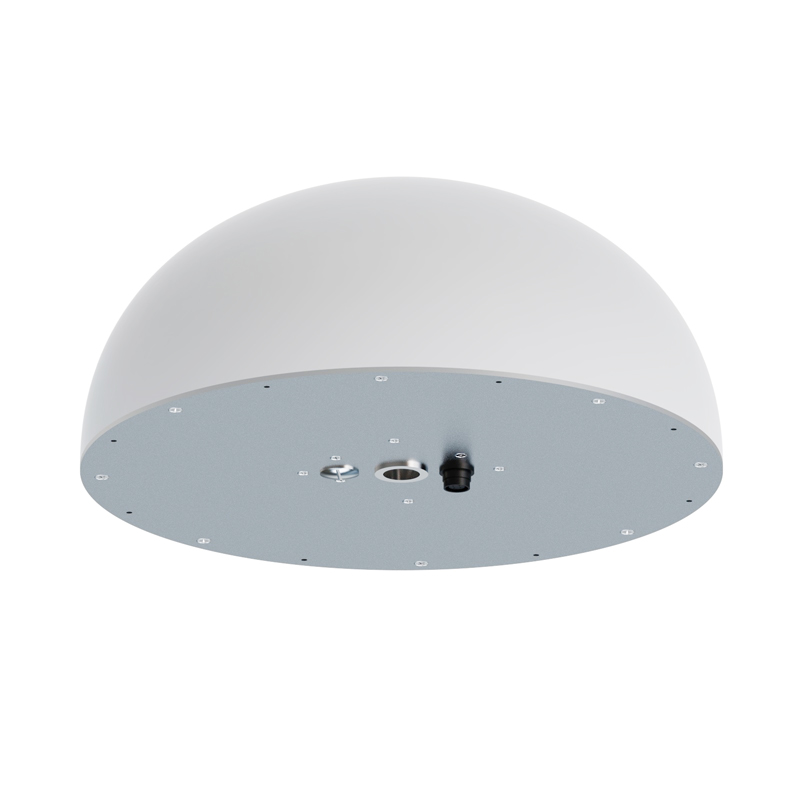
In numerous fields such as meteorological observation, aerospace, and environmental monitoring, measuring wind speed and direction is of extremely great significance. Wind speed and direction data are essential for improving the accuracy of weather forecasts. They can assist meteorological departmen...
3D Ultrasonic Anemometer Based on the principle of ultrasonic time-of-flight difference, this device simultaneously outputs wind speed data for the X, Y, and Z axes, as well as horizontal and vertical wind direction data. Designed for all-weather operation, it can be deployed in various settin...
Windway Technology is a manufacturer of river flow monitoring systems and has rich practical experience in this field. Currently, we are mainly engaged in the design, development and sales of river flow monitoring systems, and are committed to providing professional solutions to our customers, and a...
Rainfall monitor consists of a stainless steel rain gauge sensor, a data logger, a solar power system, and a pole support. It can log into an IoT platform to view real-time rainfall status, daily, weekly, monthly, and yearly rainfall data, and is widely used in monitoring and early warning of...


 Skype
Skype
 whatsapp
 mail
mail