Shandong Fengtu IOT Technology Co., Ltd
Sales Manager:Ms. Emily Wang
Cel,Whatsapp,Wechat:+86 15898932201
Email:info@fengtutec.com
Add:No. 155 Optoelectronic Industry Accelerator, Gaoxin District, Weifang, Shandong, China


Sales Manager:Ms. Emily Wang
Cel,Whatsapp,Wechat:+86 15898932201
Email:info@fengtutec.com
Add:No. 155 Optoelectronic Industry Accelerator, Gaoxin District, Weifang, Shandong, China
time:2025-06-25 09:28:40 source:Weather Station viewed:661 time
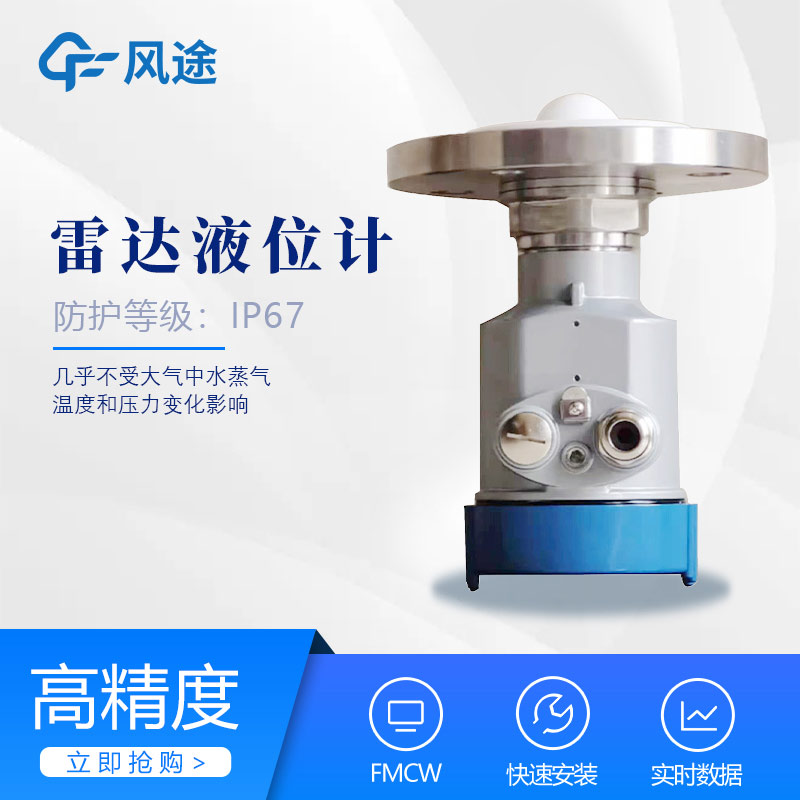
In industry, liquid level measurement of corrosive media is a critical process, and Corrosive liquid level sensors, such as the YW - 26B, are the primary application instruments. Below is a detailed explanation of the working principle and usage method of such level gauges.
The YW - 26B Corrosive liquid level sensor is based on the time - of - flight principle and belongs to a general - purpose radar level gauge. It transmits low - energy, extremely short microwave pulses through the antenna system and receives the reflected signals. The radar waves propagate at the speed of light, and the electronic components convert the travel time of the radar waves from transmission to reception into a level signal.
Specifically, the high - frequency pulses emitted by the probe travel at the speed of light in space and are reflected when they encounter the surface of the material. The receiver in the instrument receives the reflected pulses, thereby converting the distance signal into an actual level signal.
This level gauge uses non - contact measurement. The probe does not come into direct contact with the measured medium, fundamentally avoiding corrosion and wear problems. Moreover, it is not affected by factors such as temperature, pressure, and steam, and can maintain stable measurement in complex working conditions.
When using the YW - 26B Corrosive liquid level sensor, installation is very important. During installation, a position without signal interference should be selected to ensure that the radar signal transmission is not blocked by obstacles such as pipes and supports. The level gauge should be installed vertically so that the radar signal can reach the liquid surface vertically and be effectively reflected. If there are steam or bubbles on the surface of the measured liquid, which may affect the measurement accuracy, a guide tube can be used or the installation height can be adjusted to avoid the interference area.
After the installation is completed, connect the output signal of the level gauge to the control system to realize real - time data transmission. Then, set the corresponding parameters according to the characteristics of the liquid such as the dielectric constant and temperature, and calibrate with the known liquid level.
In summary, the YW - 26B Corrosive liquid level sensor provides an effective means for the liquid level measurement of corrosive media in industrial production, meeting the needs of accurate and stable measurement.
what is the tool that measures precipitation called a rain gauge is used to measure the depth (in millimeters/inch) of liquid precipitation over a period of time....
Mining operations are like a double-edged sword: while fueling economic growth, they leave behind environmental challenges, with slope instability and soil erosion being the most pressing. Mountain landslides are no trivial matter—accidents such as equipment burial and worker entrapment occur frequ...
A miniature weather monitoring station is a device for measuring, recording and transmitting meteorological data, which usually consists of multiple sensors that can measure a wide range of meteorological parameters such as temperature, humidity, barometric pressure, wind speed, wind direction, rain...
The Atmospheric environment monitoring system is a crucial tool for controlling air quality. Its function is to measure the content of various pollutants in the air, including particulate matter, gases, and volatile organic compounds. The entire system mainly consists of air quality sensors and moni...


 Skype
Skype
 whatsapp
 mail
mail