Shandong Fengtu IOT Technology Co., Ltd
Sales Manager:Ms. Emily Wang
Cel,Whatsapp,Wechat:+86 15898932201
Email:info@fengtutec.com
Add:No. 155 Optoelectronic Industry Accelerator, Gaoxin District, Weifang, Shandong, China


Sales Manager:Ms. Emily Wang
Cel,Whatsapp,Wechat:+86 15898932201
Email:info@fengtutec.com
Add:No. 155 Optoelectronic Industry Accelerator, Gaoxin District, Weifang, Shandong, China
time:2024-12-27 15:28:54 source:Weather Station viewed:776 time
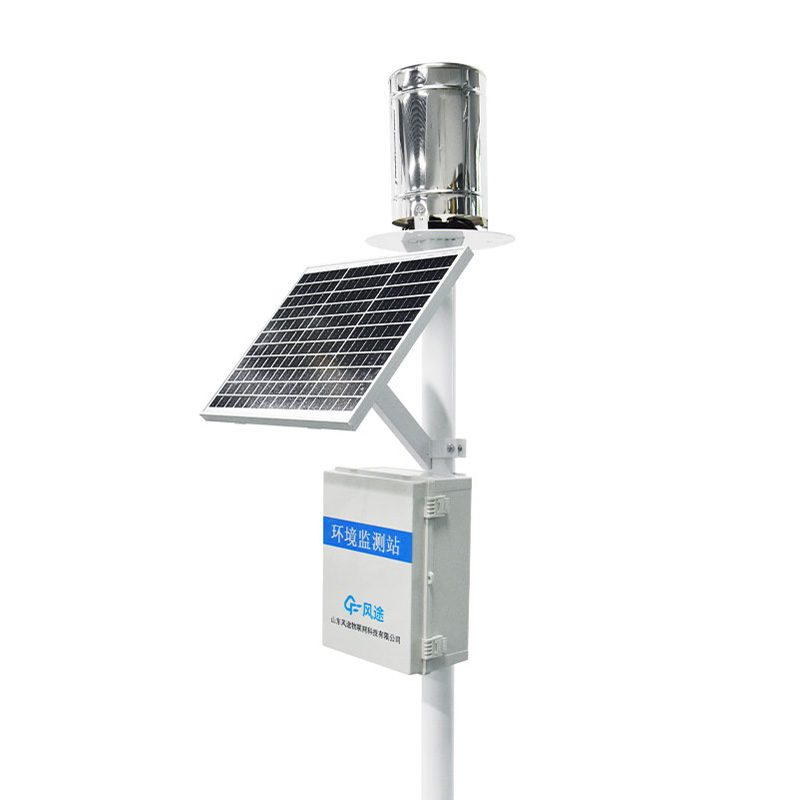
1.Product overview of definition of rain gauge
definition of rain gauge is used to determine the depth of precipitation occurring on a unit area and measure the amount of rainfall. The working principle is to collect rainwater in a container and measure it.definition of rain Gauge is a modern rainfall station based on the Internet of Things.It is composed of stainless steel rain sensors, collectors, solar power supply systems, pole brackets, etc.The equipment can send rainfall data in the form of wireless remote transmission, and the data can be sent wirelessly and remotely.Send to the monitoring platform and log in to the IoT platform View real-time data and historical records.Rainfall data includes rainfall status, rainfall at each data collection interval, daily rainfall, weekly rainfall, monthly rainfall, annual rainfall, etc.Data sent to the platform can be directly exported to desktop EXCEL form for users to conduct further data analysis and processing.
The definition of rain gauge can be widely used in meteorology, flood control, agriculture, hydrology and water conservancy, environmental protection, highways, airports and ports and other fields.It can not only provide original data for relevant departments such as meteorological observatories (stations), hydrological stations, agriculture and forestry, national defense, and field reporting stations to measure parameters such as precipitation amount, precipitation intensity, and precipitation time; it can also provide original data for flood control, water supply dispatching, power stations, and reservoir water regime management.Provide reference-worthy real-time data.
2.Product features of definition of rain gauge
Low power collector: static power consumption is less than 50uA
Standard GPRS networking, support for extended Bluetooth and wired transmission
Support modbus485 sensor expansion
Solar Charge Management MPPT Automatic Power Point Tracking
SMS alarm, send SMS to the designated mobile phone after exceeding the limit
Stainless steel material protective box, corrosion-resistant, anti-oxidation, waterproof grade IP66
3.Technical parameters of definition of rain gauge:
1.Measuring range: Rain intensity 0~4mm/min
2.Measurement accuracy: ±0.2mm
3.Resolution: 0.2mm
4.Reporting form: wireless remote transmission
5.Rain-bearing diameter: φ200mm
6.Power supply method: solar power supply
7.Solar power: 30W
8.Battery parameters: 20Ah
9.Bracket height: 1.5 meters
10.Working environment: -40℃~60℃
4.Introduction to the definition of rain gauge cloud platform
The CS architecture software platform supports direct observation on mobile phones and PC browsers without the need to install additional software.
Support multiple accounts and multiple devices to log in
Supports real-time data display and historical data display dashboard
Cloud servers and cloud data storage are stable, reliable, easy to expand, and load balanced.
Support SMS alarm and threshold setting
Supports map display and viewing device information.
Support data curve analysis
Support data export table format
Supports data forwarding, HJ-212 protocol, TCP forwarding, http protocol, etc.
Support data post-processing function
Supports external running of javascript scripts
Hydrological telemetry terminal is a dedicated RTU device for water management, integrating data acquisition, edge computing, and multi-protocol communication. It connects various sensors to automatically collect, process, store, and remotely transmit hydrological data such as water level, flow rate, and rainfall. It is widely used in hydrological monitoring, flood warning, and water resource management....
Waterlogging monitors are usually installed in areas of the city that are prone to waterlogging, such as low-lying areas, underground passages, and under overpasses. It acts as a "data collector", using high-precision water level sensors and other equipment to accurately collect key data s...
Weather sensor manufacturers are all over the world, and I recommend Windway Technology. This is a company that focuses on the research and development and production of various weather monitoring equipment, with independent research and development capabilities, providing a wide range of weather st...
The data collection process of smart agriculture involves detailed and continuous monitoring of farmland conditions through integrated high-tech sensing technologies, real-time monitoring systems and advanced equipment such as drones. The data collected by these technological means provide farmers w...


 Skype
Skype
 whatsapp
 mail
mail