Shandong Fengtu IOT Technology Co., Ltd
Sales Manager:Ms. Emily Wang
Cel,Whatsapp,Wechat:+86 15898932201
Email:info@fengtutec.com
Add:No. 155 Optoelectronic Industry Accelerator, Gaoxin District, Weifang, Shandong, China


Sales Manager:Ms. Emily Wang
Cel,Whatsapp,Wechat:+86 15898932201
Email:info@fengtutec.com
Add:No. 155 Optoelectronic Industry Accelerator, Gaoxin District, Weifang, Shandong, China

Model:FT-Y1
Brand:fengtu
1.Instrument to measure rainfall product overview
instrument to measure rainfall accurately measures real-time rainfall, is maintenance-free and easy to operate, and can measure urban/field extremely heavy rainfall levels.The instrument to measure rainfall uses PVDF piezoelectric film as a rain sensing device and uses an embedded AI neural network to distinguish raindrop signals to avoid false triggering due to interference such as grit, dust, and vibration.
It is widely used in meteorological environment monitoring, hydrological and water conservancy comprehensive monitoring stations, traffic road monitoring, agriculture, forestry, wind power generation and other relevant departments to remotely measure precipitation, precipitation intensity, precipitation start and end time.It is used in hydrological automatic measurement and reporting systems and automatic field measurement and reporting stations for the purpose of flood control, water supply scheduling, and water situation management of power stations and reservoirs.
2.Features of instrument to measure rainfall
1.Integrated design, exquisite appearance
2.No mechanical parts, no exposed parts, can filter similar signals introduced by environmental factors such as leaves, dust, insects, etc.
3.High measurement accuracy, wide range, good stability, low power consumption, and strong resistance to external interference
4.Can work around the clock, not affected by weather changes, accurate to the second rainfall duration monitoring
5.Maintenance-free, the raindrop contact surface is an arc-shaped design structure, and rainwater is not stored.
6.After installation, it has automatic level calibration function, no need for on-site calibration
7.Small size, easy to carry, disassemble and install
3.Instrument to measure rainfall technical parameters
| Measuring range | 0-4mm/min |
| Measurement accuracy | ≤±4% |
| Resolution | 0.01mm |
| Sampling frequency | <1S |
| Communication interface | RS485 |
| Communication Protocol | MODBUS |
| power supply | DC12V |
| Power consumption | 0.12W |
| Operating temperature | -40~85℃ |
| Operating humidity | 0~100%RH |
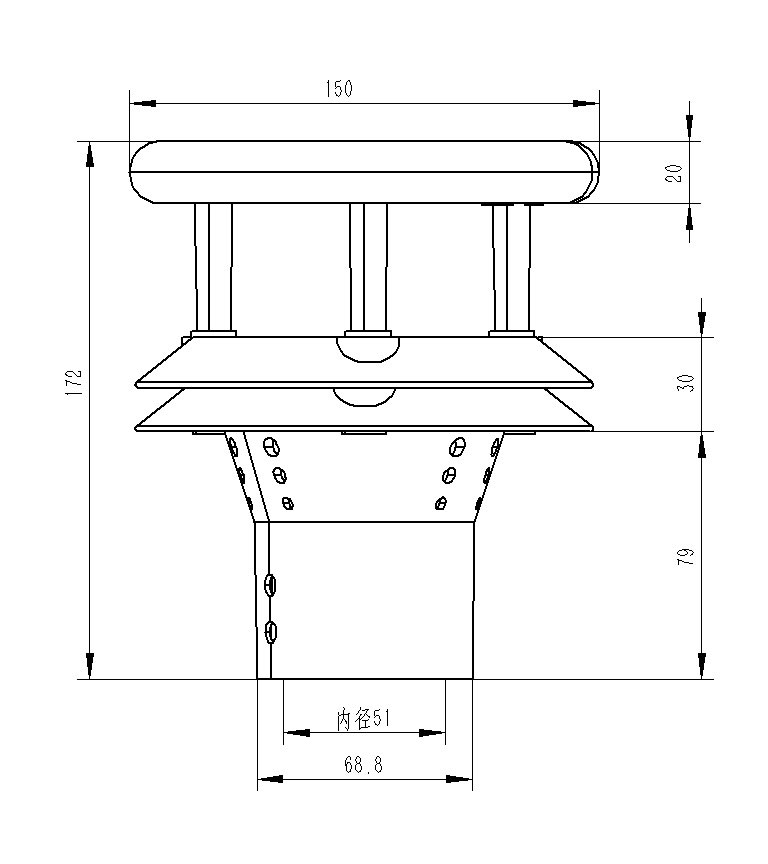
IV.Instrument to measure rainfall product size diagram
5.Instrument to measure rainfall product structure diagram
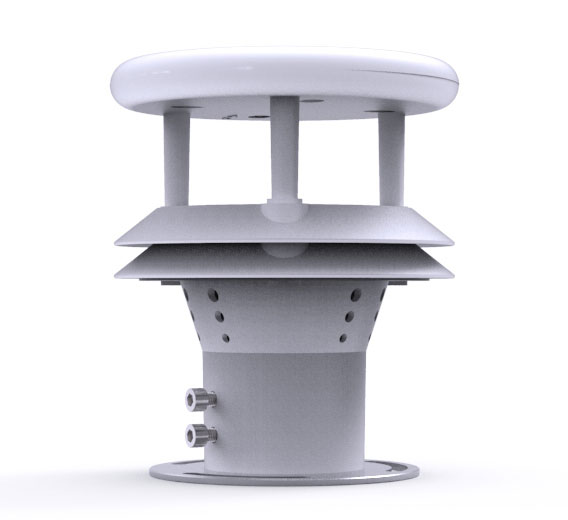
6.Notes on instrument to measure rainfall
1.The sensor should be within a radius of 1 meter horizontally without any obstruction to avoid the impact of water droplets splashing
2.The sensor should be installed away from strong mechanical vibration sources
3.The area above the sensor should be open, raindrops should fall directly onto the sensor, and secondary dripping and continuous water flow impact should be avoided.
Ground-based multi-element automatic weather stations are the basic facilities to achieve large scale, long time continuous observation. With the rapid development of computer technology and communication network technology, it needs to be modified and upgraded in order to improve the data processin...
China's water resources are relatively scarce, with a per capita share of about 2,000 cubic metres, far below the global average of 28 per cent. Since the founding of the State, the frequency of droughts in China has been rising, and the area affected by drought has been expanding year by year....
Radar level meter is an advanced instrument widely used in the field of liquid level measurement, especially in all kinds of storage tanks. It adopts a contactless measurement method, which can accurately measure the volume of liquid in storage tanks.The reason why radar level meter is widely used i...
Multi-layer soil moisture monitor, based on the frequency domain reflection method in GB/T28418-2012 standard, measures soil moisture in each soil layer. The instrument adopts high-precision digital temperature sensor to monitor the temperature of each soil layer in real time. Users can customise di...


 Get a Free Quote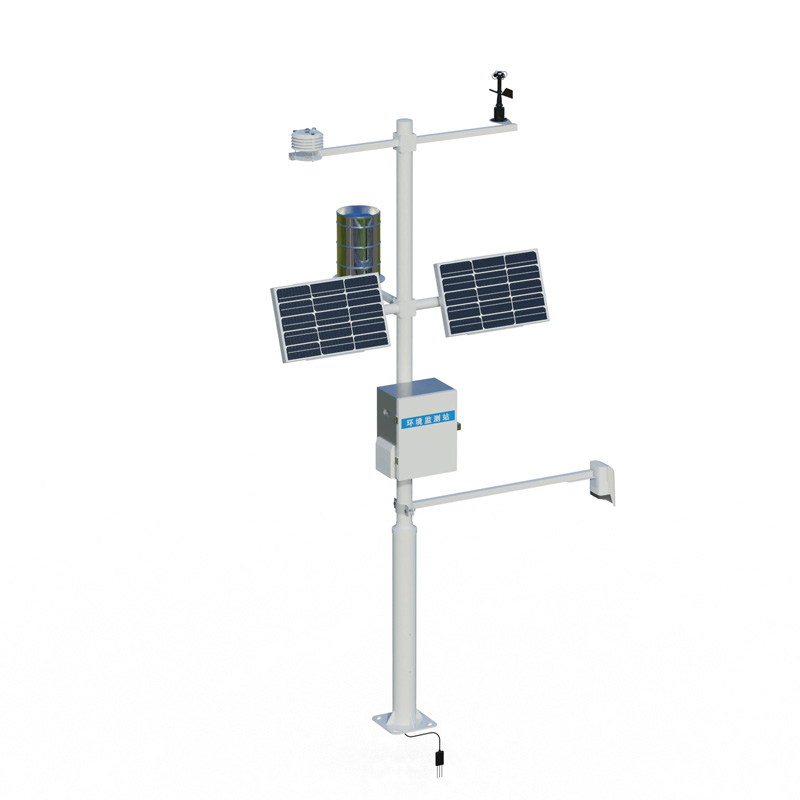

 Skype
Skype
 whatsapp
 mail
mail