Shandong Fengtu IOT Technology Co., Ltd
Sales Manager:Ms. Emily Wang
Cel,Whatsapp,Wechat:+86 15898932201
Email:info@fengtutec.com
Add:No. 155 Optoelectronic Industry Accelerator, Gaoxin District, Weifang, Shandong, China


Sales Manager:Ms. Emily Wang
Cel,Whatsapp,Wechat:+86 15898932201
Email:info@fengtutec.com
Add:No. 155 Optoelectronic Industry Accelerator, Gaoxin District, Weifang, Shandong, China
time:2026-04-21 09:58:38 source:Weather Station viewed:161 time
Air quality sensor is a proprietary, independently developed monitor designed to measure comprehensive air environmental indices. It comes standard with an RS485 communication interface and supports the MODBUS protocol, with optional configurations available for RS232, USB, and Ethernet interfaces. The device is capable of monitoring six core pollutants—PM2.5, PM10, CO, SO2, NO2, and O3—offering a measurement accuracy of ±10% for PM2.5 and PM10, and ±5% F.S. (Full Scale) for the four gaseous pollutants. Featuring a modular structural design, the product allows for the independent replacement of individual sensors, thereby facilitating convenient maintenance and servicing in the long term.
The key technical specifications of the Air quality sensor include: PM2.5 range of 0–1000 µg/m³ (±10%); PM10 range of 0–1000 µg/m³ (±10%); Carbon Monoxide (CO) range of 0–10 ppm (±5% F.S.); Sulfur Dioxide (SO2) range of 0–5 ppm (±5% F.S.); Nitrogen Dioxide (NO2) range of 0–5 ppm (±5% F.S.); and Ozone (O3) range of 0–5 ppm (±5% F.S.). These parameters encompass the six fundamental pollutants stipulated in environmental air quality standards, thereby satisfying the requirements of most air quality monitoring scenarios.
Regarding data transmission, the product features a standard RS485 communication interface utilizing the standard MODBUS protocol; this design ensures seamless compatibility between the device and various data acquisition systems, PLCs, and industrial PCs. Furthermore, users may select optional RS232, USB, or Ethernet interfaces based on their specific application requirements. These options support real-time data retrieval, facilitating easy integration into diverse monitoring platforms and systems. The modular structural design allows for the independent replacement of individual sensors, effectively reducing long-term maintenance costs; should a specific sensor reach the end of its service life or experience a malfunction, only the corresponding sensor module needs to be replaced, eliminating the need to replace the entire unit.
Air quality sensor is widely deployed in a variety of applications, including urban air quality monitoring, pollution surveillance within industrial parks, environmental assessment of road traffic areas, and air quality monitoring in scenic tourist zones. Depending on the specific installation environment, the device can be configured for either wall-mounted or ceiling-mounted installation. On-site data can be viewed directly via the built-in display screen, while monitoring data can also be accessed in real-time through a remote cloud platform, a web interface, or a WeChat Official Account, thereby enabling continuous 24-hour online monitoring. Its modular design allows users to flexibly configure monitoring parameters according to their specific requirements, avoiding unnecessary hardware investment while ensuring the device's scalability. As standards for atmospheric pollution prevention and control continue to rise, Air quality sensor is playing an increasingly vital role in the construction of environmental monitoring networks.
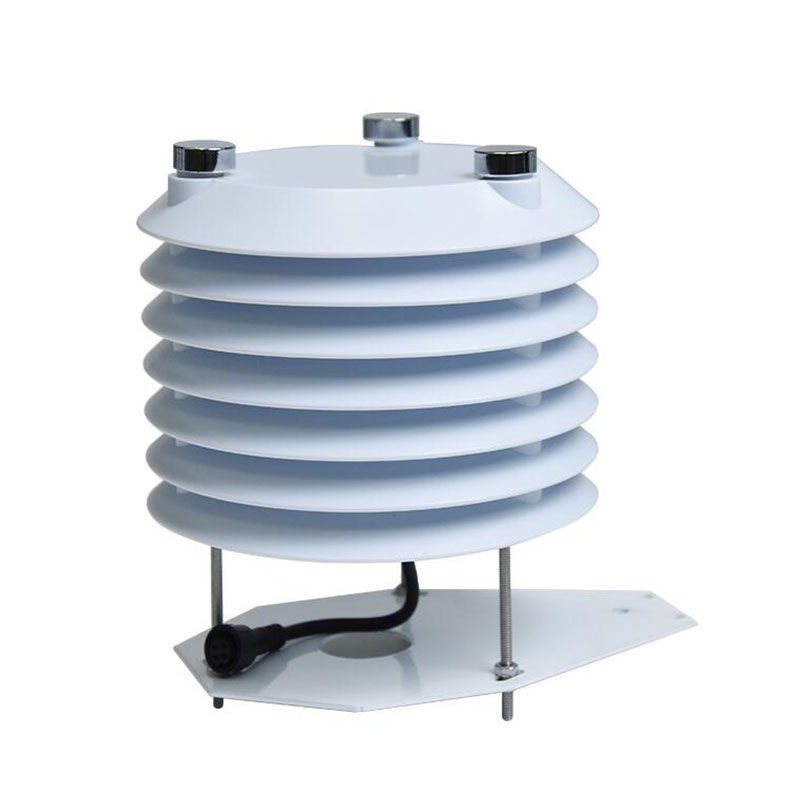
Traditional manual monitoring requires staff to regularly visit various monitoring points and collect data using professional tools. When measuring water levels, devices such as levels may be used, and water level heights are recorded through manual readings. For flow velocity measurement, current m...
Surface evaporation is the process by which a body of water releases water to the atmosphere through evaporation and is usually measured in millimeters of evaporation per day (mm/d). For example, annual evaporation may reach 980 mm, while monthly evaporation in June is 125 mm. Factors that affect th...
In the open - pit mining operations, slope instability is a common and widespread problem.Firstly, open - pit mines are usually very high, with some reaching up to hundreds of meters. The rock layers exposed on the slopes are numerous and in extremely complex conditions, which makes slope instabilit...
Fengtu Technology has 4 water level monitoring stations, the models are: FT-SW1, FT-SW2, FT-SW3, FT-SW4. For details, please contact the customer service of this website.Fengtu Hydrological Monitoring Station adopts radar technology to measure hydrological data by non-contact method, with low power...


 Skype
Skype
 whatsapp
 mail
mail