Shandong Fengtu IOT Technology Co., Ltd
Sales Manager:Ms. Emily Wang
Cel,Whatsapp,Wechat:+86 15898932201
Email:info@fengtutec.com
Add:No. 155 Optoelectronic Industry Accelerator, Gaoxin District, Weifang, Shandong, China


Sales Manager:Ms. Emily Wang
Cel,Whatsapp,Wechat:+86 15898932201
Email:info@fengtutec.com
Add:No. 155 Optoelectronic Industry Accelerator, Gaoxin District, Weifang, Shandong, China
time:2026-01-28 09:18:54 source:Weather Station viewed:387 time
Water level monitoring instrument is specifically designed for precise distance measurement, utilizing the FMCW (Frequency Modulated Continuous Wave) mode. It features non-contact installation, a compact structure, low power consumption, and strong anti-interference capabilities, making it suitable for real-time water level monitoring in various scenarios such as rivers and lakes, flash flood warning systems, reservoirs, and sewage networks.
Water level monitoring is a critical aspect of hydrological management, disaster prevention and mitigation, and infrastructure operation. The non-contact Water level monitoring instrument, employing FMCW technology, provides a highly reliable solution. The instrument emits a high-frequency continuous wave towards the water surface and receives the reflected wave. By calculating the frequency difference between the transmitted and received waves, it accurately determines the distance between the sensor and the water surface, thus determining the water level. This non-contact measurement method avoids the drawbacks of traditional contact sensors, which are susceptible to corrosion and sedimentation.
The core advantages of Water level monitoring instrument lie in its high precision and strong anti-interference capabilities. FMCW technology is inherently insensitive to ambient noise and electromagnetic interference, maintaining stable measurements even in the presence of rain, snow, waves, or floating debris on the water surface. Its small size and compact design facilitate installation in various complex environments, such as narrow wells, under bridges, or on inaccessible riverbanks. Its low power consumption makes it suitable for long-term monitoring stations powered by solar energy in remote areas, reducing operation and maintenance costs.
In practical applications, Water level monitoring instrument demonstrates wide applicability. In hydrological stations on rivers and lakes, it is used to continuously record water level changes, providing a data foundation for water resource management and flood forecasting. In areas prone to flash floods, as a front-end sensing device for early warning systems, its reliable data is crucial for timely issuance of warning information and activation of evacuation measures. In urban water management, it can monitor the water levels of reservoirs and water tanks, and can also be installed in manholes of sewage networks to monitor pipe fullness, providing a basis for drainage scheduling and flood control. Furthermore, it can effectively perform water level monitoring functions in irrigation canals, drinking water sources, and industrial circulating water systems.
Ease of installation and maintenance is another important feature. Non-contact measurement means that installation does not require the construction of stilling wells or contact with the water body. Typically, it only requires securely mounting the sensor above the measurement point, followed by horizontal calibration and parameter setting. This significantly reduces civil engineering work and installation time. Routine maintenance mainly involves regularly checking the equipment's mounting and cleaning dust or condensation from the radar antenna cover, ensuring long-term data continuity and accuracy.
In summary, non-contact water level measurement based on FMCW technology, with its high precision, high stability, and environmental adaptability, is gradually becoming the mainstream choice for modern water level monitoring. It provides accurate water level data for various industries such as water conservancy, environmental protection, and municipal services, effectively supporting scientific decision-making, safe operation, and disaster prevention. With the development of IoT technology, such instruments can be more easily integrated into remote monitoring platforms, enabling real-time data transmission and intelligent analysis, further enhancing the intelligence level of water management.
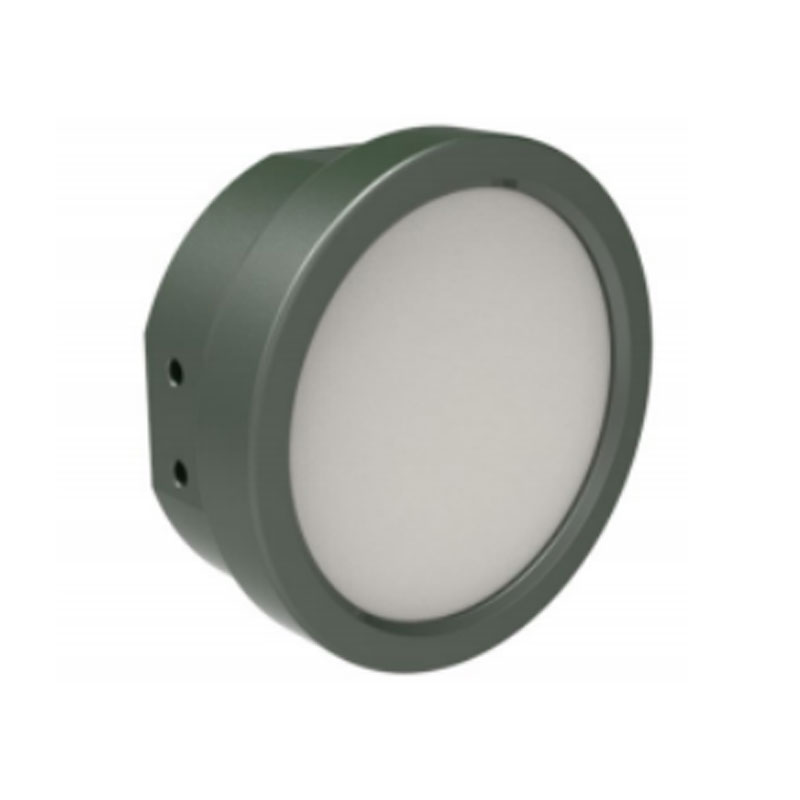
A portable visibility sensor is a device capable of measuring the brightness of the surrounding environment and the visibility of the atmosphere. It usually uses laser or infrared technology to provide visibility data quickly and accurately by measuring parameters such as light scattering and reflec...
Thermal power, as a core component of China's power system, continues to play a fundamental and safeguarding role in the current process of energy structure adjustment. This form of energy releases heat by burning fossil fuels such as coal, oil, and natural gas to drive generator sets. According...
The principle of ultrasonic wind speed and direction meter is to use ultrasonic time difference method to achieve the purpose of wind speed and direction measurement. The speed of sound propagation in the air is iterated with the speed of airflow in the wind direction. If the ultrasonic propagation...
In an air quality monitoring station, the "four gases" refer to sulfur dioxide (SO₂), nitrogen dioxide (NO₂), carbon monoxide (CO), and ozone (O₃), while the "two particulates" are fine particulate matter (PM2.5) and inhalable particulate matter (PM10).Cities are vast in space...


 Skype
Skype
 whatsapp
 mail
mail