Shandong Fengtu IOT Technology Co., Ltd
Sales Manager:Ms. Emily Wang
Cel,Whatsapp,Wechat:+86 15898932201
Email:info@fengtutec.com
Add:No. 155 Optoelectronic Industry Accelerator, Gaoxin District, Weifang, Shandong, China


Sales Manager:Ms. Emily Wang
Cel,Whatsapp,Wechat:+86 15898932201
Email:info@fengtutec.com
Add:No. 155 Optoelectronic Industry Accelerator, Gaoxin District, Weifang, Shandong, China
time:2024-07-25 08:37:32 source:Weather Station viewed:677 time
With advances in technology, facility-based agriculture is emerging as a model of agriculture that utilizes greenhouses and related equipment to control the environment in which crops are grown. It is characterized by high yield, high efficiency and high quality, and is a technology-intensive form of agriculture.
In facility agriculture, greenhouse monitoring and control systems are critical, and the selection and design of sensors is at the heart of this system. The performance of the sensor directly affects the accuracy and reliability of the data, which in turn affects the control effect of the entire greenhouse environment. Therefore, the selection of appropriate sensors is crucial for realizing efficient and accurate greenhouse management.
At present, the main sensors are temperature and humidity sensors, carbon dioxide sensors and so on. However, Fengtu's "Multi-factor Environment Monitor" is an integrated sensor that can simultaneously measure temperature, humidity, carbon dioxide, light and other data, providing an affordable and easy-to-use solution for greenhouses. Compact and intelligent, this device helps farmers manage the greenhouse environment more effectively, reduce labor costs, and realize the transition from traditional greenhouses to smart greenhouses. The device uploads monitoring data to the server via 4G network, so users can log in to the cloud platform to view and download data anytime, anywhere.
Greenhouse management is evolving from just monitoring environmental conditions to directly monitoring the crop itself. In the future, it may be possible to measure the physiological activities of the crop, such as temperature, photosynthesis, transpiration, as well as changes in the growth of plant stems and fruits. Such monitoring could help control CO₂ concentrations, irrigation, and nutrient supply in the greenhouse more precisely. The type and number of sensors used in greenhouses is increasing as demand grows. Windway is developing more sensors for greenhouses to support this more refined approach to crop management. This will make greenhouse agriculture more efficient and smarter.
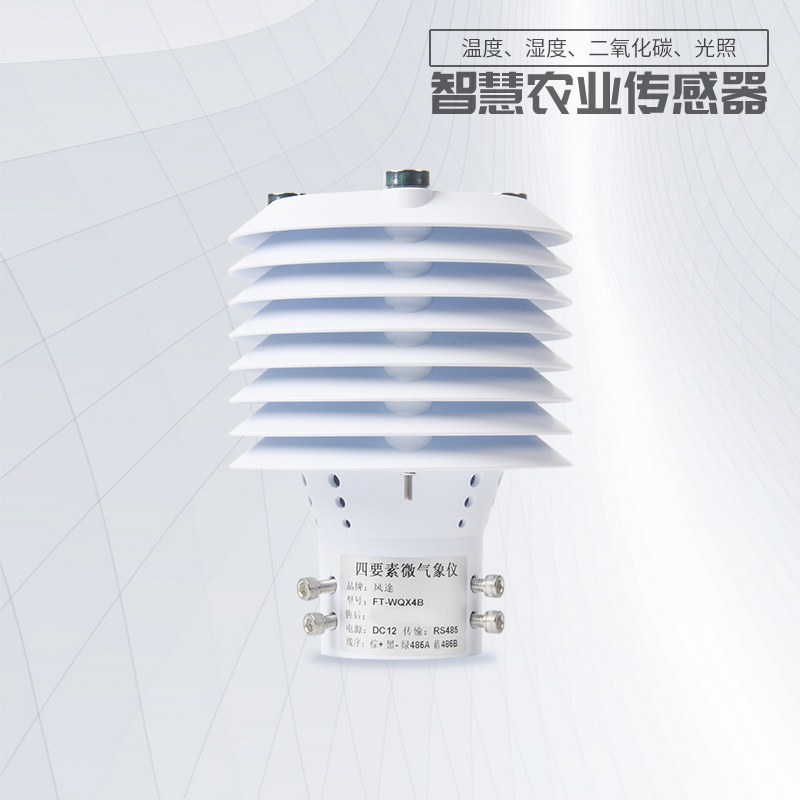
best home weather station conducts real-time observations of indoor and outdoor temperature, humidity, barometric pressure, optical rainfall, pm2.5, pm10 and other meteorological elements....
Hello everyone, at present Windway Technology has been on the new tilt displacement monitor, also known as geohazard monitoring system, which is an online automatic remote geohazard monitoring and early warning system based on Internet of Things technology, recognizing the model FT-DH1, FT-DH2.In th...
With the acceleration of urbanization, smart city has become an important development direction for future city construction. Smart light poles as an important part of the smart city, its environmental sensors in the realization of intelligent lighting at the same time, but also for the city's e...
Measuring rainfall is an important task in fields such as meteorological research, disaster early warning, hydrological monitoring, and agricultural management. Here are three common types of rain gauges.1. Radar Precipitation Sensor Rain Gauge DistrometerThe Radar Precipitation Sensor Rain Gauge Di...


 Skype
Skype
 whatsapp
 mail
mail