Shandong Fengtu IOT Technology Co., Ltd
Sales Manager:Ms. Emily Wang
Cel,Whatsapp,Wechat:+86 15898932201
Email:info@fengtutec.com
Add:No. 155 Optoelectronic Industry Accelerator, Gaoxin District, Weifang, Shandong, China


Sales Manager:Ms. Emily Wang
Cel,Whatsapp,Wechat:+86 15898932201
Email:info@fengtutec.com
Add:No. 155 Optoelectronic Industry Accelerator, Gaoxin District, Weifang, Shandong, China
time:2025-08-01 09:05:01 source:Weather Station viewed:754 time
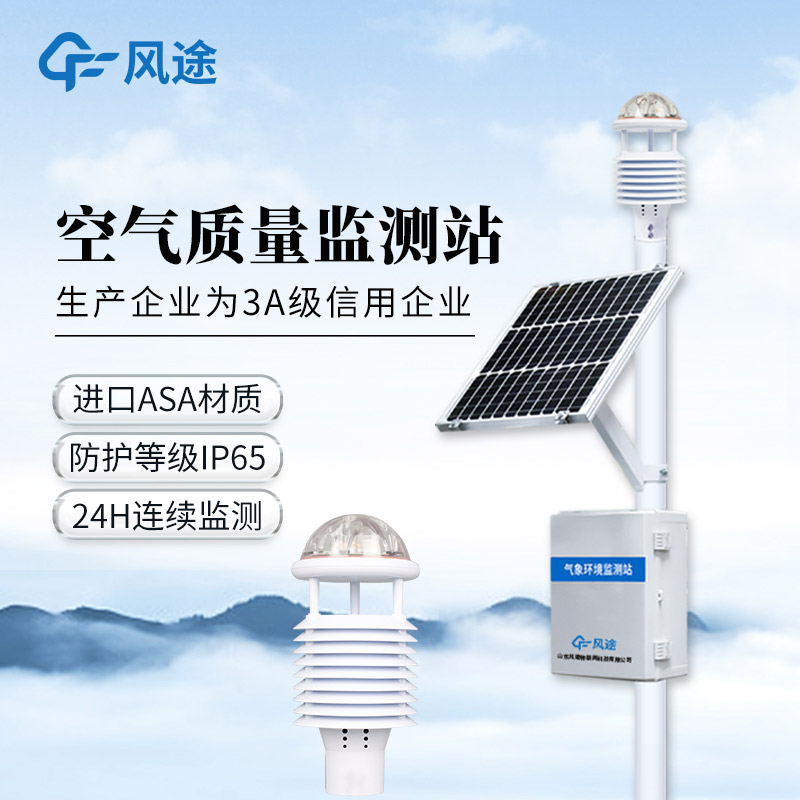
A large number of industrial enterprises are concentrated in industrial parks. Industrial production activities will inevitably affect the surrounding air quality. To supervise and improve air quality, it is necessary to deploy Air Quality Monitoring Stations in the parks.
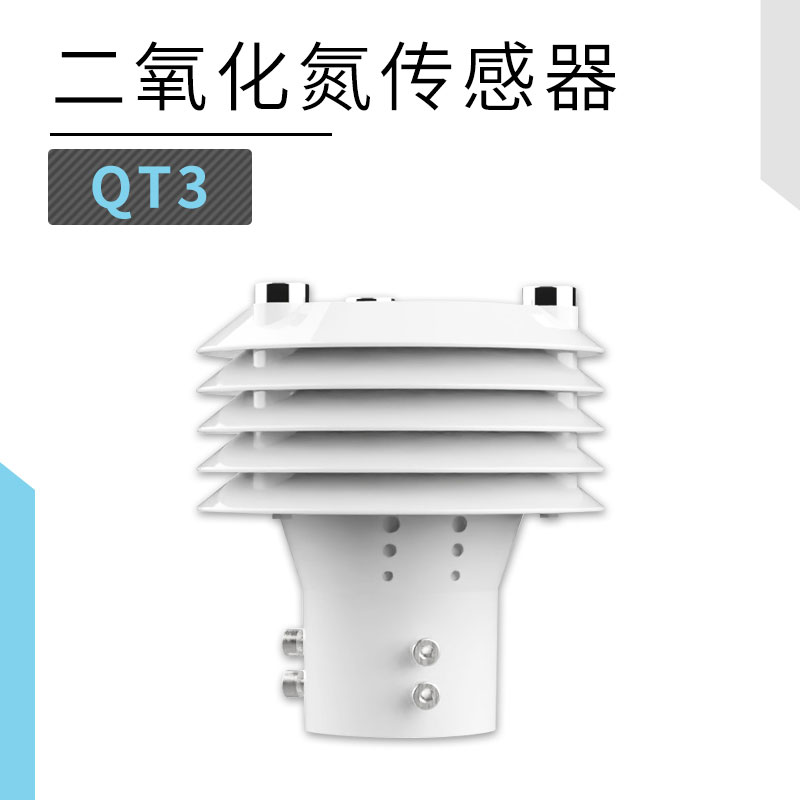
An Air Quality Monitoring Station is a device used to monitor air quality. It is small in size and versatile. Through various built-in sensors, it can conduct real-time monitoring of multiple pollutants in the air. Common monitoring indicators include sulfur dioxide and nitrogen oxides, which mainly come from the combustion process of industrial fuels; there are also particulate matters, such as PM2.5 and PM10, which come from dust emissions in industrial production, material transportation and other links. At the same time, the monitoring station can also track and record changes in the concentration of pollutants such as carbon monoxide and ozone.
From the perspective of environmental supervision, deploying Air Quality Monitoring Stations in the park can assist relevant departments in realizing refined management of the park's air quality. In the past, relying only on a few large-scale monitoring stations, it was difficult to accurately grasp the subtle differences and real-time changes in air quality in different areas within the park. However, micro monitoring stations can be densely deployed in various corners of the park to build a comprehensive monitoring network, realizing high-density and all-round monitoring of air quality. Once an abnormal increase in pollutant concentration in a certain area is found, the possible pollution source can be quickly located, providing accurate clues for environmental law enforcement, effectively cracking down on enterprises' illegal discharge behaviors, and reducing pollutant emissions from the source.
For enterprises themselves, installing Air Quality Monitoring Stations is conducive to strengthening their internal environmental management. Enterprises can adjust production processes and optimize the operating parameters of pollution control facilities in a timely manner based on monitoring data. If it is monitored that the concentration of pollutants emitted by a production workshop is approaching or exceeding the standard, the enterprise can quickly investigate the problem and take measures such as improving the production process and replacing environmental protection equipment to reduce the amount of pollutants generated. This not only fulfills environmental protection responsibilities, but also avoids fines and reputation losses caused by excessive emissions, so as to achieve sustainable development of the enterprise.
Air Quality Monitoring Stations can also provide important information for the public. Nowadays, people are paying more and more attention to the quality of the surrounding environment. Residents around industrial parks can obtain monitoring station data through relevant platforms to understand the real-time air quality and protect their right to know. At the same time, public supervision also urges enterprises to pay more attention to environmental protection work.
In short, although Air Quality Monitoring Stations are small, they play a great role in monitoring and improving the air quality of industrial parks. They are powerful tools to promote green industrial development and protect the blue sky and white clouds.
Float-type and pressure-type sensors are prone to being affected by water flow scouring, sediment deposition, water quality corrosion, and floating debris impacts, leading to reduced measurement accuracy, equipment damage, and difficulty in stable operation under severe weather conditions. However,...
Soil moisture content monitoring station, an integrated monitoring system, integrates soil temperature and moisture detection, data storage, transmission and management functions, which consists of a dedicated data acquisition terminal, soil moisture sensor, solar power generation system and a visua...
The 5-in-1 Weather Sensor, a high-performance meteorological monitoring device meticulously crafted by Fengtu IoT, is specifically designed for complex environments such as docks. It can monitor five key meteorological parameters - wind speed, wind direction, temperature, humidity, and air pressure...
Intelligent street light is a street light that is smarter than ordinary street light. It can not only illuminate, but also through carrying a variety of equipment and sensors, collect urban information, provide convenient services, such as charging, display information, detection of parking and so...


 Skype
Skype
 whatsapp
 mail
mail