Shandong Fengtu IOT Technology Co., Ltd
Sales Manager:Ms. Emily Wang
Cel,Whatsapp,Wechat:+86 15898932201
Email:info@fengtutec.com
Add:No. 155 Optoelectronic Industry Accelerator, Gaoxin District, Weifang, Shandong, China


Sales Manager:Ms. Emily Wang
Cel,Whatsapp,Wechat:+86 15898932201
Email:info@fengtutec.com
Add:No. 155 Optoelectronic Industry Accelerator, Gaoxin District, Weifang, Shandong, China
time:2025-03-21 13:18:04 source:Weather Station viewed:690 time
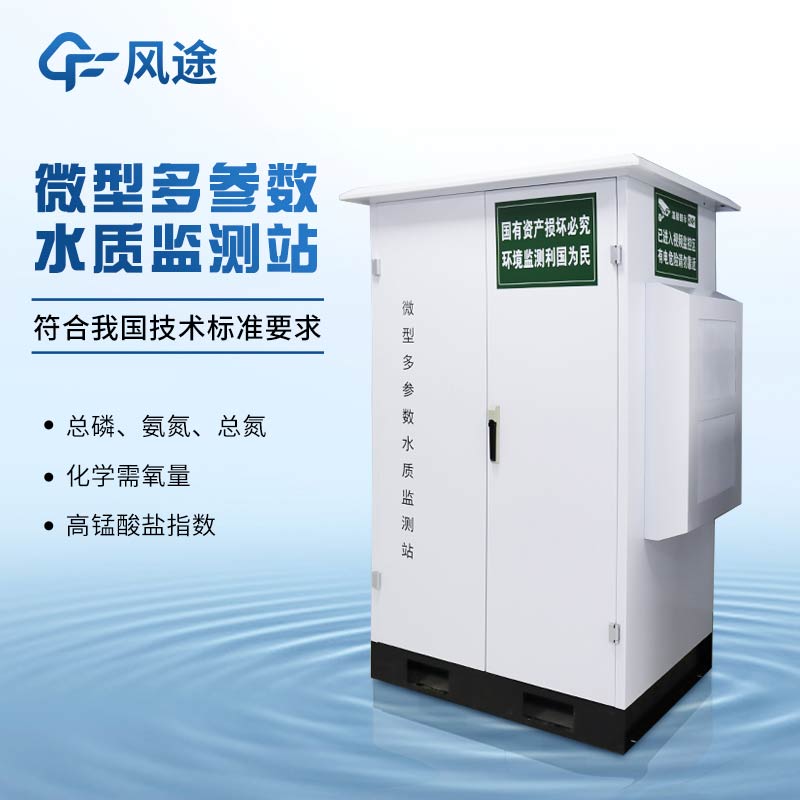
The FT - GSZ04 Water Supply Quality Station is a Water Quality Monitoring Station Secondary Water that integrates Internet of Things technology, combining functions such as sensor data collection, data display, and analysis. The system consists of multiple units including steady - flow exhaust, analysis and testing, system control, and remote communication, and has complete power supply, lightning protection, and network communication functions.
This device is specifically designed for the pipe pressure environment of < 0.3Mpa at the water supply end. It has an extremely wide range of application scenarios. It can be used in urban or rural waterworks, tap water transmission pipe networks, secondary water supply, user terminals, indoor swimming pools, as well as online water quality monitoring of large - scale water purification equipment and direct - drinking water. It is commonly seen in fields such as waterworks production process control, water resources and water affairs management, and health supervision.
The FT - GSZ04 Water Supply Quality Station supports 4G GPRS networking and can also be expanded with RJ45 networking and remote sensor transmission according to requirements. Data can be displayed on a 7.0 - inch touch - controlled LED screen, or an Android screen can be optionally expanded for display and storage. The Android screen supports 2G data storage and data export via a USB flash drive. In terms of communication protocols, it supports one - way RS485 modbus - RTU protocol slave station to achieve multi - channel RS485 modbus - RTU sensor expansion. The supporting Internet of Things data display, storage, and analysis platform also supports data forwarding of multiple protocols such as TCP short - link and HTTP protocol.
Its system composition includes multiple parts. The power supply unit uses an AC220 to DC12V/3A power adapter to ensure the stable operation of the system. The analysis and testing unit is composed of water temperature, conductivity, PH, and turbidity sensors, which are stably installed on the flow cell through threaded or close - fitting fasteners. The working environment requires a temperature range of 0 - 50℃ and a pressure of < 0.3Mpa, with excellent measurement accuracy. For example, the temperature measurement accuracy can reach ±0.3℃. When installing, it is necessary to ensure that the sensor is tilted at an angle of at least 15 degrees and cannot be installed upside - down or horizontally. The multi - parameter monitor of the display unit is installed at the cabinet door. Based on the Android 4.4.2 system, it uses a quad - core Cortex™ - A7 CPU, with 512M/4G of RAM/ROM and a 7 - inch capacitive touch screen. It supports USB flash drive and memory card expansion and is responsible for operations such as data collection, parsing, and display. Remote communication relies on the RS485 interface, following the MODBUS - RTU communication protocol. The factory - set device address is 6 (decimal), and it supports reading data with function code 03. The main unit of the equipment box is named GSZ. It is installed on the floor of the cabinet with a stable base. Its external dimensions are 600X500X250mm. The shell is made of 304 stainless steel with a protection level of IP54. The water inlet, water outlet, and sewage outlet all use 2 - point water purifier PE pipes with an outer diameter of φ6.5. There are corresponding regulations for flow rate and pressure, and multiple sensors can be selected and configured according to actual needs.
Ultrasonic wind speed and direction sensors, as a high-precision and highly reliable measuring instrument, have become an indispensable measuring tool in many fields. Using ultrasonic technology, this sensor is able to measure wind speed and direction in real time and accurately, providing reliable...
humidity sensor how does it work? Used to measure air humidity and temperature, it is a device that detects and measures the humidity or water content in the surrounding air....
Wind speed, the speed at which air moves, is a key parameter in meteorology. When the difference in air pressure between two places increases, the speed of air movement increases, resulting in an increase in wind speed and an increase in the force of the wind. For this reason, it is common to use wi...
In the Internet era, soil moisture monitoring systems can be revitalized by combining with technologies such as the Internet of Things, big data and artificial intelligence. For example, real-time monitoring and remote transmission of soil moisture data can be realized by using IoT technology. By de...


 Skype
Skype
 whatsapp
 mail
mail