Shandong Fengtu IOT Technology Co., Ltd
Sales Manager:Ms. Emily Wang
Cel,Whatsapp,Wechat:+86 15898932201
Email:info@fengtutec.com
Add:No. 155 Optoelectronic Industry Accelerator, Gaoxin District, Weifang, Shandong, China


Sales Manager:Ms. Emily Wang
Cel,Whatsapp,Wechat:+86 15898932201
Email:info@fengtutec.com
Add:No. 155 Optoelectronic Industry Accelerator, Gaoxin District, Weifang, Shandong, China
time:2025-11-25 09:13:32 source:Weather Station viewed:346 time
GNSS sensor is a device used to receive and process global navigation satellite system signals. This device enables precise positioning and is widely used in geological disaster monitoring, building safety assessment, and transportation management, playing a crucial role in fields such as aviation and surveying.
GNSS sensor is an electronic device specifically designed to receive, track, process, and measure global navigation satellite system signals. It can simultaneously receive signals from multiple satellite navigation systems, including the US GPS, China's Beidou, Russia's GLONASS, and the EU's Galileo system. By processing the radio signals transmitted by these satellites, the device can calculate the three-dimensional position, velocity, and time information of its antenna phase center in a specific coordinate system.
In the field of engineering safety monitoring, the application of GNSS sensor is particularly prominent. It is widely used in dam safety monitoring, where multiple monitoring points are deployed at key locations on the dam body with significant elevation differences to continuously obtain millimeter-level precision displacement data. This real-time data, processed by specialized software, generates dam deformation trend charts, providing reliable safety assessment basis for engineering managers. In bridge health monitoring, receivers are installed on key components such as bridge towers and main beams to continuously monitor the dynamic response of the bridge under temperature changes, vehicle loads, and wind forces. This monitoring method effectively identifies abnormal displacements of the bridge structure, providing data support for preventive maintenance.
Geological disaster monitoring is another important application area. In landslide early warning systems, GNSS sensor is deployed on the surface of potential landslide areas and in stable bedrock regions. By comparing the position changes of different monitoring points, the displacement rate and direction of the landslide can be accurately calculated. When the monitoring data exceeds a preset threshold, the system automatically issues a warning signal, providing valuable time for personnel evacuation and disaster prevention. This technology is also applicable to monitoring ground subsidence, mine collapse, and other geological environments.
In addition to the field of engineering safety, GNSS sensor has wide applications in aviation navigation, maritime positioning, military operations, geological exploration, and precision agriculture. In the aviation field, it provides precise navigation services for civil and military aircraft; in the maritime field, it provides real-time positioning and route planning for various vessels; in the agricultural field, by combining GNSS sensor with agricultural machinery, it enables intelligent operations such as automatic navigation and precision fertilization. Modern GNSS technology continues to develop, and the application of advanced technologies such as multi-frequency multi-system, real-time kinematic differential positioning, and precise point positioning has continuously improved its reliability in complex environments. With advancements in chip technology and algorithms, the size, power consumption, and cost of receivers are gradually decreasing, while accuracy and stability are constantly improving, creating favorable conditions for its wider application in more fields.
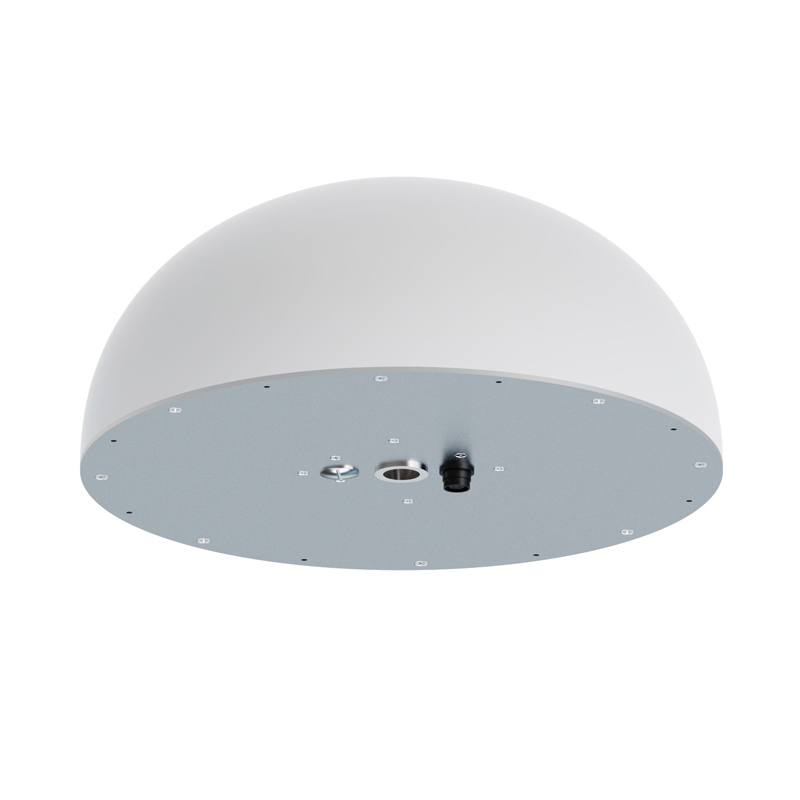
Wave measuring instrument for wave-making pool is a specialized device for accurately measuring free-flow wave parameters and water level height. It is suitable for long-term reliable monitoring in marine, port, reservoir, and lake environments, providing crucial data support for hydrological research, engineering testing, and safety early warning....
best anemometer accurately measures wind speed and direction, reading wind speeds up to 60m/s with high accuracy, and is able to withstand strong winds carrying dust, humidity and even rain....
In weather monitoring and various industrial applications, the performance of wind speed sensors is crucial. Today, we will conduct a comprehensive unboxing review of the Ultrasonic Anemometer FT-WQX2 to gain an in-depth understanding of its features.1. First Impressions Upon UnboxingThe FT-WQ...
A radar rain sensor is a sensor that utilizes the radar principle to measure rainfall. It utilizes radar technology to measure the microwave signals reflected back from rainfall, so as to obtain information such as the size, number and speed of raindrops, and then calculate the intensity and amount...


 Skype
Skype
 whatsapp
 mail
mail