Shandong Fengtu IOT Technology Co., Ltd
Sales Manager:Ms. Emily Wang
Cel,Whatsapp,Wechat:+86 15898932201
Email:info@fengtutec.com
Add:No. 155 Optoelectronic Industry Accelerator, Gaoxin District, Weifang, Shandong, China


Sales Manager:Ms. Emily Wang
Cel,Whatsapp,Wechat:+86 15898932201
Email:info@fengtutec.com
Add:No. 155 Optoelectronic Industry Accelerator, Gaoxin District, Weifang, Shandong, China
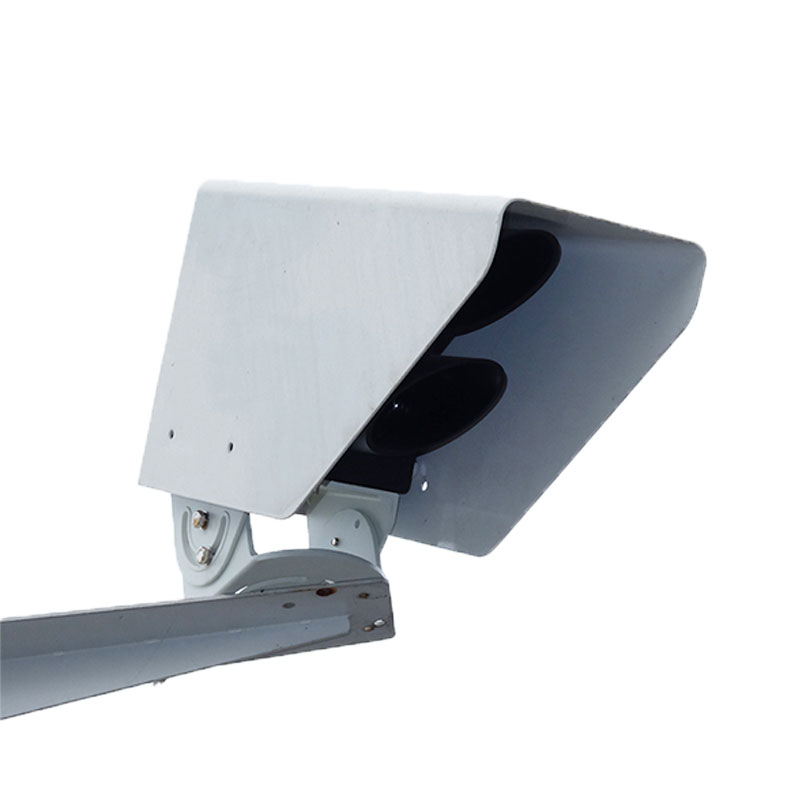
Model:FT-LM2
Brand:fengtu
Non Contact Road Condition Sensor Product Introduction
Non Contact Road Condition Sensor can provide data such as road water and ice thickness, and can also measure surface temperature, air temperature, atmospheric pressure and other parameters.The LM2 is a Non Contact Road Condition Sensor that uses remote sensing technology to avoid damage to the road and thus avoid traffic interference caused by the installation of road weather stations. Multi-spectral measurement technology enables accurate detection of the thickness of icy, snow and water on the surface of the road. In road conditions where the embedded pavement sensor is inconvenient or inaccessible, the LM2 detector is the ideal choice. Remote sensing installation means no need to close the road or cut the road surface, and the installation work is both safe and convenient. Low maintenance is an ideal choice for the composition of road meteorological systems. It can be installed on existing weather stations or on other buildings with unobstructed views of the road surface.
The LM2 detector is installed in an all-weather, durable housing to ensure that it can withstand severe weather, which allows it to provide accurate data in any weather conditions. By providing road surface condition information, the LM2 detector provides accurate monitoring data to the road management department and takes response measures before road safety risks occur. Rugged design, all-weather measurement
Non Contact Road Condition Sensor Features
Test the road area, water, snow, and icing thickness
Long distance remote sensing to detect road conditions
Non-buried installation is fast and easy
Low maintenance cost
Integrate into existing highway automatic meteorological monitoring network applications
Long distance installation
Bridge surface
Areas with frequent accidents
Areas with high traffic flow
Characteristics of areas with frequent rain and snow
Long distance measurement of road area water, ice and snow
Measure the road state
Measure the degree of water accumulation, ice surface, slipperyness
Non-buried design
Resistant to rust
Infrared detection up to 15 meters
No need for closed lanes, easy installation and maintenance
Non Contact Road Condition Sensor Key Metrics
Model LM2
Monitoring distance 2-15 meters
Detection diameter 23cm angle 30-90 degrees
Power input 220VAC, 24VDC
Maximum power consumption 5W (including lens heating)
Operating temperature -38ºC to +70ºC
Operating humidity 0 to 100%
Road state parameter output
Road area water thickness: 0.00-10mm Resolution: 0.01mm Accuracy: 0.1mm
Pavement ice thickness: 0.00-10mm
Road area snow thickness: 0.00-10mm
Pavement slippery degree: 0.00-1 resolution: 0.01 (*)
Pavement temperature: -38ºC to +60ºC (*)
Pavement humidity: 0-100% (*)
Ambient temperature and humidity: -40ºC to +70ºC (*)
Atmospheric pressure: 150-1100hPa
Pavement status report dry, damp, wet, snow, ice, ice water mix (*frost)
Lens pollution detection optical lens pollution level measurement and internal automatic pollution compensation
Pavement materials concrete and asphalt pavement
Communication RS485, RS232
Average failure-free 10 years
No security issues
Infrared remote sensing measurement technology
Note: * marked parameters are optional, not standard.
Dissolved oxygen refers to the molecular oxygen dissolved in water, expressed as the number of milligrams of oxygen per liter of water (mg/L). It is an important indicator for measuring the self-purification capacity of water bodies and is crucial for the survival of aquatic organisms, the balance o...
best weather stations for home can be used to monitor air temperature, humidity, atmospheric pressure, wind speed, wind direction....
Float-type and pressure-type sensors are prone to being affected by water flow scouring, sediment deposition, water quality corrosion, and floating debris impacts, leading to reduced measurement accuracy, equipment damage, and difficulty in stable operation under severe weather conditions. However,...
Monitoring soil moisture is very important. Firstly, it can accurately understand the moisture content in the soil, provide scientific basis for agricultural production, ensure that crops grow in a suitable moisture environment, and improve yield and quality. Secondly, it can reasonably arrange irri...


 Get a Free Quote
 Skype
Skype
 whatsapp
 mail
mail