Shandong Fengtu IOT Technology Co., Ltd
Sales Manager:Ms. Emily Wang
Cel,Whatsapp,Wechat:+86 15898932201
Email:info@fengtutec.com
Add:No. 155 Optoelectronic Industry Accelerator, Gaoxin District, Weifang, Shandong, China


Sales Manager:Ms. Emily Wang
Cel,Whatsapp,Wechat:+86 15898932201
Email:info@fengtutec.com
Add:No. 155 Optoelectronic Industry Accelerator, Gaoxin District, Weifang, Shandong, China
time:2025-11-24 09:34:40 source:Weather Station viewed:434 time
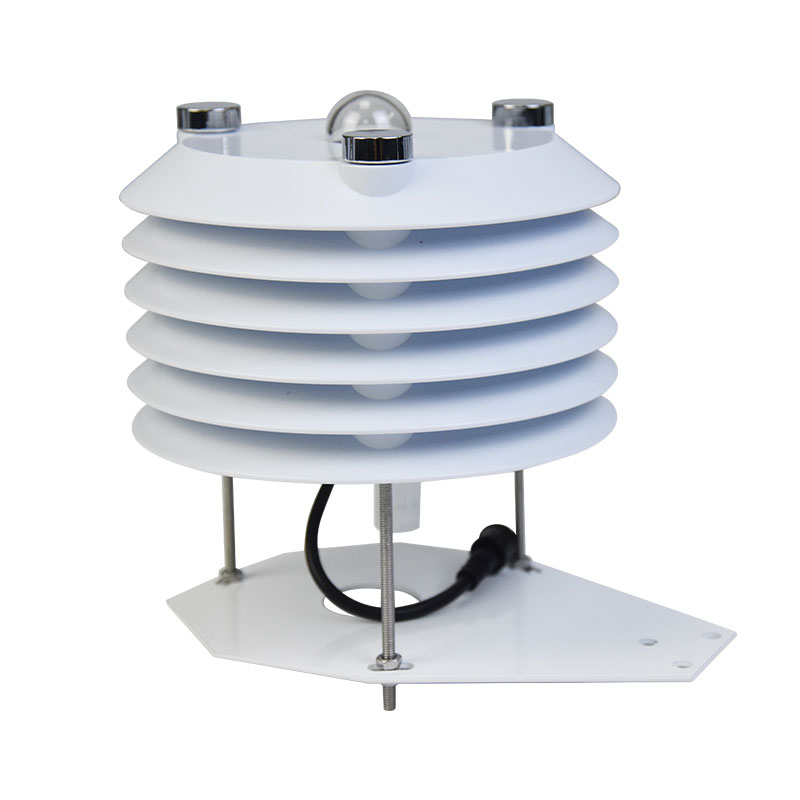
Environmental Sensors is a small instrument used to measure environmental parameters, providing crucial information about pollutants.
Environmental Sensors is a device used for measuring and monitoring environmental parameters, widely applied in various fields such as agriculture, industry, and urban management. These sensors can detect multiple indicators, including air temperature, air humidity, light intensity, PM2.5, PM10, and noise, providing a data foundation for environmental management. Especially in urban grid-based environmental monitoring, it is a compact and easy-to-install instrument that provides crucial information about pollutants that threaten the health of community residents, becoming an important component of modern urban environmental management.
Technically, Environmental Sensors operates through built-in sensitive elements and conversion modules. The sensor collects physical or chemical signals from the environment, such as particulate matter concentration in the air or sound wave vibrations, and converts them into measurable electrical signals. After initial processing, the data is transmitted to a data center via wired or wireless transmission. The urban grid-based monitoring model divides the urban area into multiple grid units, deploying these small sensors at each grid point to form a high-density monitoring network. This layout overcomes the shortcomings of traditional large monitoring stations, which are limited in number and coverage, enabling high-resolution capture of environmental pollution. The sensor's structural design emphasizes practicality and adaptability, usually employing protective casings and modular components, allowing it to be installed on various urban facilities such as streetlights and building facades. The installation process is simple and quick, requiring no large-scale civil engineering.
The core value of Environmental Sensors lies in the environmental data it provides. By real-time measurement of fine particulate matter concentrations such as PM2.5 and PM10, the sensor can reveal the spatial distribution characteristics and temporal variation patterns of air pollution, identifying pollution hotspots. The noise monitoring function helps assess urban acoustic environment quality, especially in sensitive areas such as residential areas and schools. Simultaneously, combining temperature, humidity, and light intensity data allows for a more comprehensive understanding of environmental conditions and their impact on pollutant dispersion. This information is of great significance for protecting the health of community residents, as long-term exposure to high concentrations of pollutants increases the risk of respiratory and cardiovascular diseases. By obtaining these key parameters in a timely manner, relevant departments can take targeted intervention measures.
In practical applications, Environmental Sensors has demonstrated significant results. Many cities have incorporated these devices into smart city projects, achieving refined management of environmental quality through grid-based deployment. When sensors detect pollutant concentrations exceeding safe levels, the system automatically issues an alarm, prompting managers to investigate and address the issue. In industrial areas, the sensor network continuously monitors corporate emissions, providing evidence for environmental enforcement. At the community level, residents can access publicly available monitoring data to understand the environmental conditions in their area and make informed health protection decisions. Compared to traditional monitoring methods, this distributed sensor network offers advantages such as lower cost, wider coverage, and greater data timeliness.
With advancements in IoT technology and data analysis methods, the performance and functionality of the system will continue to improve. Future sensors may integrate more monitoring indicators, such as volatile organic compounds and heavy metals, and provide more accurate measurement results. Simultaneously, through deep integration with other urban management systems, the system will play a greater role in urban planning, public health, and emergency management. The development of this technology will ultimately help us build a healthier and more livable urban environment, safeguarding the well-being of community residents.
What are the benefits of installing a regional automatic weather station? A regional automatic weather station can realize the functions of collecting, processing and storing weather data, playing an important role in weather analysis and providing a reliable basis for local weather warning. It has...
Ultrasonic explosion-proof weather station is one of the main products of Windway Technology, model FT-FB02, which is manufactured for such special places as chemical plants and oil depots. It is an integrated weather station, integrating data collection, storage and communication upload, based on t...
Aviation safety is closely linked to meteorological conditions. Every flight—whether it's takeoff, en route, or landing—is inevitably affected by the weather conditions. Accurate meteorological information is crucial for ensuring flight safety as it helps pilots and air traffic controllers mak...
ph sensor definition is one of the most important tools for measuring pH and is used to measure the acidity or alkalinity of a liquid or solution, with pH representing its acidity or alkalinity....



 Skype
Skype
 whatsapp
 mail
mail