Shandong Fengtu IOT Technology Co., Ltd
Sales Manager:Ms. Emily Wang
Cel,Whatsapp,Wechat:+86 15898932201
Email:info@fengtutec.com
Add:No. 155 Optoelectronic Industry Accelerator, Gaoxin District, Weifang, Shandong, China


Sales Manager:Ms. Emily Wang
Cel,Whatsapp,Wechat:+86 15898932201
Email:info@fengtutec.com
Add:No. 155 Optoelectronic Industry Accelerator, Gaoxin District, Weifang, Shandong, China
time:2026-03-13 09:27:10 source:Weather Station viewed:264 time
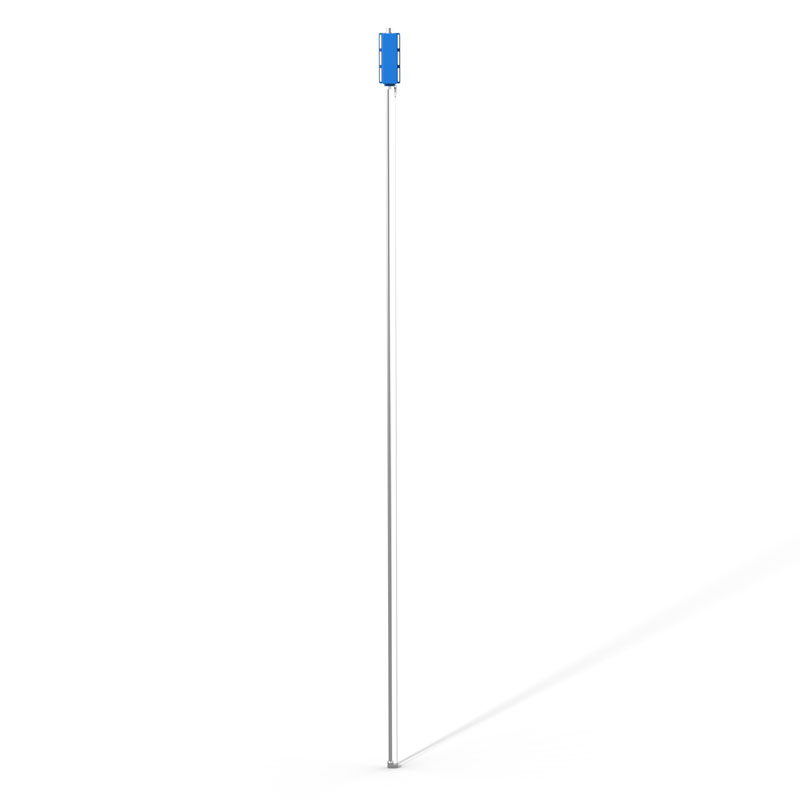
Wireless Wave Height Meter is a wave height measurement instrument that integrates pressure-sensitive elements and measurement circuitry into a single unit, capable of directly outputting digital signals. The device utilizes RS485 long-distance communication technology to ensure robust anti-interference capabilities and transmission reliability during remote data transmission, making it an ideal choice for long-term, reliable monitoring in environments such as oceans, ports, reservoirs, and lakes.
Wireless Wave Height Meter is specifically designed for wave height measurement across various aquatic environments. Its core strengths lie in its integrated design and stable long-distance communication capabilities, enabling precise data acquisition and efficient transmission without the need for complex external components. As a professional wave height measurement instrument, it features a high degree of integration between its pressure-sensitive elements and measurement circuitry; this not only simplifies the device's structure but also enhances the stability of data acquisition. By directly outputting digital signals, it minimizes errors typically introduced during intermediate conversion stages, thereby ensuring the accuracy of the monitored data.
To meet the remote monitoring requirements of diverse aquatic settings, Wireless Wave Height Meter employs RS485 long-distance communication technology. This technical feature significantly boosts the device's resistance to interference during remote data transmission, enabling it to withstand various electromagnetic disturbances and signal attenuation issues common in aquatic environments. This ensures data transmission reliability, allowing for the stable output of monitoring data—even over long distances—without the need for frequent maintenance or calibration.
The device is suitable for a wide range of applications, making it an ideal choice for long-term, reliable monitoring in oceans, ports, reservoirs, and lakes. In marine environments, it can be used to monitor wave heights, providing essential data support for maritime navigation and offshore engineering projects. In port areas, it enables real-time monitoring of wave height fluctuations, thereby enhancing the safety of port operations. In inland waters—such as reservoirs and lakes—it serves as a valuable tool for hydrological monitoring, providing precise data references for water resource management as well as flood and drought control efforts.
The integrated design of Wireless Wave Height Meter not only simplifies the installation and maintenance of the device but, combined with its stable communication performance and precise monitoring capabilities, also ensures that it can effectively meet the long-term monitoring demands of a wide variety of complex aquatic environments. Compared to traditional wave height measurement equipment, this system eliminates the need for complex cabling and offers flexible deployment capabilities. Its installation position can be flexibly adjusted to suit the specific monitoring requirements of diverse scenarios, thereby enabling comprehensive, blind-spot-free wave height monitoring. As the demand for water area monitoring continues to rise, Wireless Wave Height Meter—distinguished by its reliable performance—has emerged as a vital tool for monitoring operations across various aquatic environments, providing robust support for safe operations and management in relevant sectors.
Oxidation-Reduction Potential, namely ORP, reflects the difference in the oxidation-reduction potential between the indicating electrode and the reference electrode in a liquid, and it can provide a comprehensive assessment of the oxidation-reduction state of the entire system. In a wastewater treat...
Wind speed monitoring is a critical task during UAV flight. It not only helps the flight control system to develop a flight plan and adjust it in real time, but also provides critical environmental data to ensure flight safety. However, UAV wind speed and direction monitoring faces several challenge...
In many fields such as meteorology, agriculture, geology and environment at present, accurately grasping the actual condition of soil is of great significance. The birth of the multi-parameter soil monitoring system presents us with scientific and technological means for deeply understanding soil ne...
Soil moisture meter is the most suitable equipment for soil moisture monitoring, which is a scientific instrument specialized in measuring soil moisture. It mainly uses sensors to collect soil moisture in real time and transmit the data to the background, and then analyzes and calculates the corresp...


 Skype
Skype
 whatsapp
 mail
mail