Shandong Fengtu IOT Technology Co., Ltd
Sales Manager:Ms. Emily Wang
Cel,Whatsapp,Wechat:+86 15898932201
Email:info@fengtutec.com
Add:No. 155 Optoelectronic Industry Accelerator, Gaoxin District, Weifang, Shandong, China


Sales Manager:Ms. Emily Wang
Cel,Whatsapp,Wechat:+86 15898932201
Email:info@fengtutec.com
Add:No. 155 Optoelectronic Industry Accelerator, Gaoxin District, Weifang, Shandong, China
time:2026-02-06 09:11:32 source:Weather Station viewed:335 time
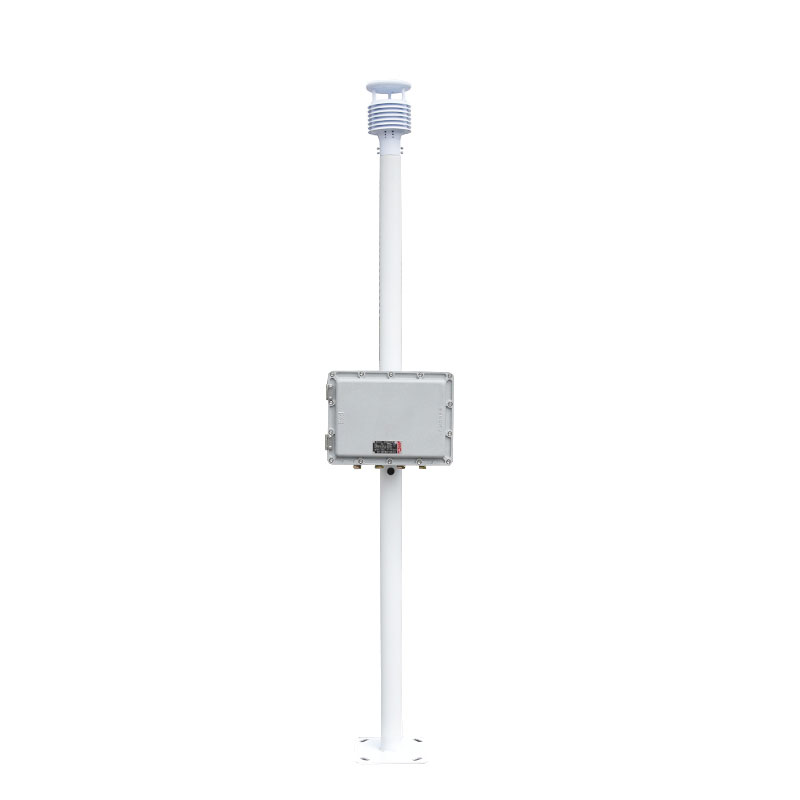
Industrial Weather Station is specifically designed for flammable and explosive environments such as chemical plants and oil depots. It integrates wind speed, wind direction, temperature, humidity, and atmospheric pressure monitoring, employing high-level explosion-proof and corrosion-resistant design. It enables automatic data collection and uploading, meeting the safety monitoring needs of major hazard areas.
Tank farms are critical areas in the petrochemical industry for storing oil, raw materials, and various chemicals. Due to the flammable and explosive nature of the stored substances, tank farms are classified as major hazard areas for enterprises. Such areas have extremely strict requirements for safe production, and any subtle changes in environmental parameters can be associated with safety risks. Therefore, real-time, accurate, and reliable monitoring of the micro-meteorological environment in and around tank farms is a crucial safety technology measure.
The Industrial Weather Station is a specialized device developed specifically for this unique application scenario. Its core design focuses on meeting the extremely demanding on-site environmental requirements. The equipment strictly adheres to explosion-proof standards, employing a high-level explosion-proof, corrosion-resistant, waterproof, dustproof, and shockproof design concept. This ensures that the weather station can operate stably for extended periods in and around tank farms, which are often filled with potentially explosive gases, corrosive media, and subject to complex and harsh weather conditions, physically eliminating the possibility of safety accidents caused by equipment problems.
In terms of monitoring functions, the weather station focuses on real-time collection of several core meteorological elements that most directly affect safe operation. The standard configuration typically includes five basic parameters: wind speed, wind direction, air temperature, air humidity, and atmospheric pressure. Wind speed and direction data are directly related to the heat dissipation efficiency of storage tanks, gas diffusion paths, and emergency response direction in case of sudden leaks; temperature, humidity, and pressure data are closely related to the volatilization rate of materials, the working status of breathing valves, and regional climate assessment. This data forms the basis for safety warnings, process adjustments, and environmental protection decisions.
The device integrates data acquisition, local storage, and remote communication and uploading functions, achieving automation and intelligence in the monitoring process. Real-time data collected by the sensors is processed through a safe and reliable internal circuit and can be stored locally for verification or transmitted in real-time to the factory's safety monitoring center or production scheduling platform via wired or wireless explosion-proof communication modules. This allows safety managers to remotely monitor the meteorological conditions of the tank farm 24/7, enabling them to promptly identify abnormal situations, such as sudden increases in wind speed that could affect operational safety, or specific temperature and humidity conditions that could exacerbate corrosion risks.
The value of Industrial Weather Station lies primarily in proactive risk prevention. By providing continuous and accurate on-site meteorological data, it helps factories establish and improve their environmental safety early warning system. The system compares real-time data with preset safety thresholds, and if it detects conditions that could trigger a hazard (such as excessive wind speed or abnormal temperature increases), it triggers an alarm, reminding operators to take preventive measures in advance, such as suspending loading and unloading operations, increasing inspections, or activating emergency ventilation. This fundamentally changes the traditional safety management model that relied on manual inspections and passive responses.
In summary, Industrial Weather Station is not simply an environmental monitoring tool, but an indispensable technical infrastructure in modern petrochemical tank farm safety management systems. It ensures its own safety with a high protection rating, perceives environmental changes with precise data, and improves response speed with intelligent transmission, providing effective technical support for ensuring production safety in areas with major hazard sources and preventing serious accidents such as fires and explosions.
Soil is the bedrock of crop growth, providing water, nutrients, and other key resources. Five major factors - matrices, climate, biology, topography and time - shape the characteristics of soil. A soil census is a comprehensive examination of the condition of soils, which is essential for ensuring f...
This is a VOC online monitoring system we launched based on PID photoionization principle. The items that can be monitored include aromatics: benzene, toluene, naphthalene, nitrobenzene, chlorobenzene, etc.; saturated and unsaturated hydrocarbons: octane, ethylene, cyclohexane, etc.; ketones, aldehy...
iot sensors are hardware components that detect changes in the environment and collect data for collecting data from the surrounding environment and transmitting it over the network....
Taking the Dissolved oxygen sensor that measures with the dual-light-source method based on the UV254 absorption method as an example, its measurement principle is based on the ultraviolet absorption method. During operation, the light source inside the instrument emits ultraviolet light, and the li...



 Skype
Skype
 whatsapp
 mail
mail