Shandong Fengtu IOT Technology Co., Ltd
Sales Manager:Ms. Emily Wang
Cel,Whatsapp,Wechat:+86 15898932201
Email:info@fengtutec.com
Add:No. 155 Optoelectronic Industry Accelerator, Gaoxin District, Weifang, Shandong, China


Sales Manager:Ms. Emily Wang
Cel,Whatsapp,Wechat:+86 15898932201
Email:info@fengtutec.com
Add:No. 155 Optoelectronic Industry Accelerator, Gaoxin District, Weifang, Shandong, China
time:2025-11-21 09:19:16 source:Weather Station viewed:443 time
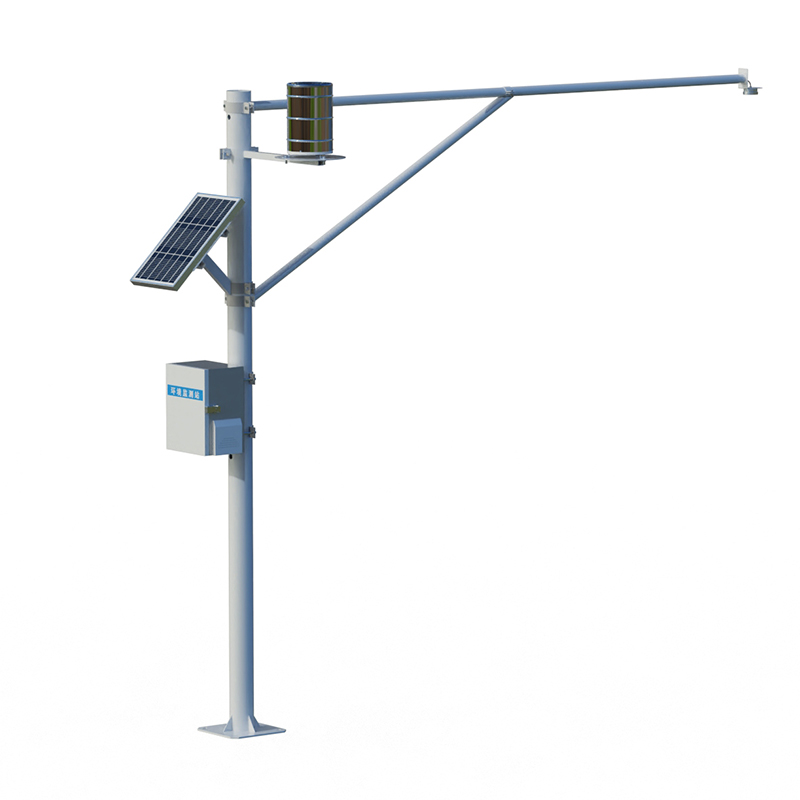
The Remote Rain Level Monitoring system is specifically designed for accurately measuring rainfall, utilizing tipping bucket or piezoelectric sensors for all-weather monitoring.
The Remote Rain Level Monitoring system is a meteorological facility specifically designed for monitoring and recording precipitation phenomena. Its core function is to accurately measure rainfall data. These stations achieve all-weather observation through high-precision sensors, providing crucial data for meteorological research, flood warning, and water resource management. The core equipment of the Remote Rain Level Monitoring system typically uses tipping bucket or piezoelectric rain gauges. Both technologies reliably capture precipitation information and operate stably in various environments.
Tipping bucket rain gauges are traditional and widely used measuring devices. Their working principle is based on a precisely designed tipping bucket structure, which flips over each time a certain amount of rainwater accumulates, simultaneously triggering an electronic signal to record the rainfall amount. The advantages of this sensor are its simple structure, easy maintenance, and lower cost, making it suitable for long-term field monitoring. However, in extreme heavy rainfall situations, slight errors may occur due to the delayed response of the tipping bucket, requiring regular calibration to ensure data accuracy.
Piezoelectric rain gauges, on the other hand, utilize modern electronic sensing technology. They calculate rainfall intensity and cumulative amount by sensing the vibrations or pressure changes generated by raindrops impacting the sensor surface. This sensor can more accurately capture instantaneous precipitation changes, especially suitable for scenarios requiring high temporal resolution, such as urban flood warning or scientific research experiments. However, its cost is usually higher than that of tipping bucket sensors, and it has certain requirements for the installation environment, requiring avoidance of external interference.
The price of the Remote Rain Level Monitoring system is affected by the sensor type, functional configuration, and auxiliary equipment. Basic models equipped with a single sensor and a simple data recorder generally cost within a few thousand yuan, suitable for regular teaching or community services. High-end models integrate multiple sensors, wireless transmission systems, and anti-interference components, supporting real-time remote data access, and may cost tens of thousands of yuan. When purchasing, it is necessary to weigh the actual monitoring objectives and budget; for example, in flood-prone areas, high precision and real-time capabilities are more critical.
In practical applications, the value of the Remote Rain Level Monitoring system is mainly reflected in data continuity and reliability. For example, in hydrological monitoring, the station can record long-term rainfall trends, helping to analyze watershed precipitation patterns; in the agricultural field, the data is used to guide irrigation decisions and optimize water resource utilization. Furthermore, educational institutions can conduct field teaching through observation stations, allowing students to understand natural phenomena by analyzing rainfall data and cultivate scientific practical skills.
Maintaining the Remote Rain Level Monitoring requires regular cleaning of debris from the sensors and checking the stability of the power supply and data transmission. In windy or dusty areas, sensors are prone to blockage or wear, affecting measurement accuracy; therefore, on-site calibration is recommended quarterly. At the same time, the station location should avoid obstruction from tall buildings or trees to ensure the representativeness of the collected data. Through standardized operation and continuous maintenance, the Remote Rain Level Monitoring can provide accurate rainfall information for a long time, supporting meteorological services and science popularization efforts.
Small and medium-sized river hydrological monitoring system is an automated device that can measure water level, flow, rainfall and other data in real time. Its a tool for the water conservancy industry. It provides remote monitoring function, and no manual intervention is required, which greatly av...
The ultrasonic wind speed and direction sensor is a highly accurate, fully digital detection device with the following features:Integrated design: wind speed and wind direction detection in one unit, providing accurate wind speed and wind direction data.Signal processing: Built-in signal processing...
The Foliage Temperature and Humidity Sensor is a highly accurate measurement tool specifically designed to accurately monitor moisture levels on plant leaves, including tiny water or ice crystals. The shape of this sensor mimics a real leaf, a design that allows it to more realistically simulate and...
Soil moisture monitoring system is like hiring a professional "doctor" for the land. Through sensors and other advanced equipment, it monitors soil moisture, temperature and other information in real time and accurately, helping people to understand soil conditions and providing a scientif...


 Skype
Skype
 whatsapp
 mail
mail