Shandong Fengtu IOT Technology Co., Ltd
Sales Manager:Ms. Emily Wang
Cel,Whatsapp,Wechat:+86 15898932201
Email:info@fengtutec.com
Add:No. 155 Optoelectronic Industry Accelerator, Gaoxin District, Weifang, Shandong, China


Sales Manager:Ms. Emily Wang
Cel,Whatsapp,Wechat:+86 15898932201
Email:info@fengtutec.com
Add:No. 155 Optoelectronic Industry Accelerator, Gaoxin District, Weifang, Shandong, China
time:2025-04-02 09:25:47 source:Weather Station viewed:861 time
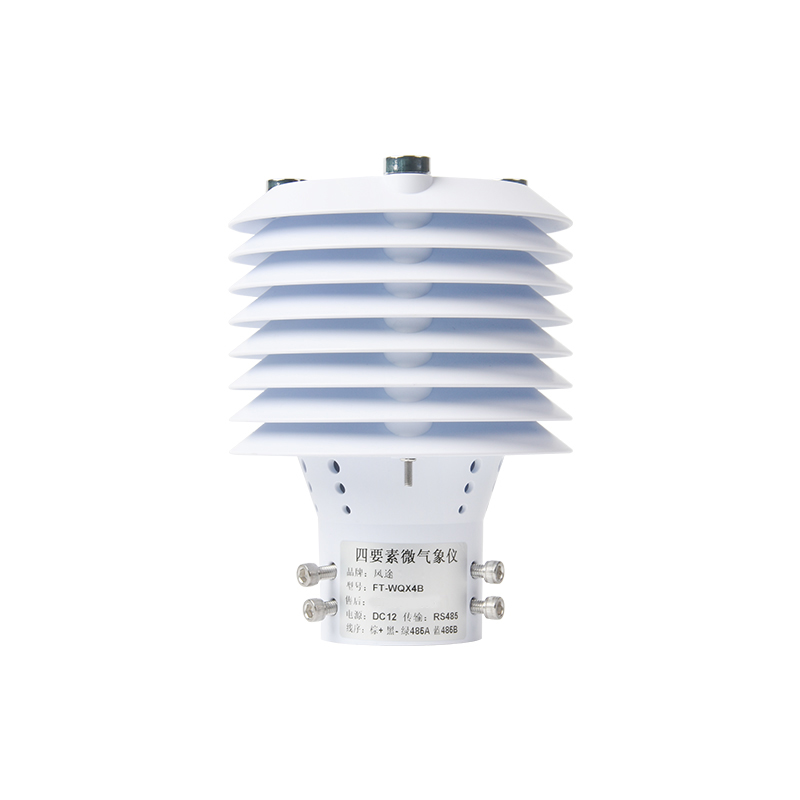
FT - B4BS Agriculture Sensors are capable of comprehensively monitoring four key environmental parameters: air temperature, air humidity, carbon dioxide concentration, and light intensity. For growing crops, temperature and humidity affect the transpiration and water absorption of crops, carbon dioxide participates in photosynthesis, and light is the energy source for the photosynthetic reactions of crops. With the help of this sensor, farmers and agricultural researchers can obtain these parameters in real time and better adjust the growth environment of crops.
(1) Air temperature: It can control the measurement error within ±0.3℃ within a wide temperature range from -40℃ to 60℃. It can monitor the changes in air temperature to ensure that the planting environment is always at a suitable temperature. For example, in a greenhouse, for some temperature-sensitive flowers or vegetables, this sensor can promptly feedback abnormal temperatures to prevent crops from being damaged due to inappropriate temperatures.
(2) Air humidity: With a humidity measurement range of 0 - 100% RH and the error controlled within ±3% RH, it helps farmers effectively prevent diseases and pests caused by excessive humidity and the problem of crop water shortage caused by low humidity.
(3) Carbon dioxide: The measurement range is 0 - 5000PPM, and the accuracy reaches ±40PPM± 3% of the reading. Through the accurate measurement of carbon dioxide concentration, in greenhouse planting, growers can timely supplement carbon dioxide when the carbon dioxide concentration is too low, promote the photosynthesis of crops, and increase crop yields.
(4) Light: With a measurement range of 0 - 157286LUX and an error of <±3%, it helps growers provide the most suitable light conditions for crops.
This sensor has a built-in collector, which simplifies the installation and use process of the sensor. It not only reduces the connection of external devices and lowers the risk of failure but also can collect, process, and store the measured data in real time. Users can easily obtain and analyze the data through the supporting software or platform, providing reliable support for agricultural production decisions.
Moisture monitoring system is a set of intelligent agricultural monitoring system based on Internet of Things (IoT), which realizes the real-time monitoring of soil moisture content and its changes through the components of sensors, communication network and cloud platform.The specific workflow is a...
In the journey of air pollution control, accurately monitoring air quality and quickly identifying pollution sources are crucial steps toward success. This requires the use of an Air Quality Monitoring Station.Traditional air quality monitoring mainly relies on a small number of large-scale monitori...
In the face of the serious impact of hazy weather on traffic safety and public travelling, the establishment of a weather station for visibility in foggy areas is of paramount importance. So, what exactly are the core hardware equipment needed for such a weather station?The visibility measuring inst...
Medical cold storage houses large quantities of pharmaceuticals, which often need to be kept within a specific temperature range to maintain their quality and activity. Because changes in temperature may affect the chemical properties and potency of pharmaceuticals, temperature observations are need...


 Skype
Skype
 whatsapp
 mail
mail