Shandong Fengtu IOT Technology Co., Ltd
Sales Manager:Ms. Emily Wang
Cel,Whatsapp,Wechat:+86 15898932201
Email:info@fengtutec.com
Add:No. 155 Optoelectronic Industry Accelerator, Gaoxin District, Weifang, Shandong, China


Sales Manager:Ms. Emily Wang
Cel,Whatsapp,Wechat:+86 15898932201
Email:info@fengtutec.com
Add:No. 155 Optoelectronic Industry Accelerator, Gaoxin District, Weifang, Shandong, China
time:2025-03-14 13:45:43 source:Weather Station viewed:635 time
Carbon monoxide and nitrogen dioxide gases in mines pose great hazards to the safety of miners' lives and mine operations, which is the main reason for their monitoring.
Carbon monoxide is a colorless, odorless, and tasteless gas. Its affinity for human hemoglobin is 200 - 300 times higher than that of oxygen for hemoglobin. When miners inhale carbon monoxide, it quickly binds to hemoglobin to form carboxyhemoglobin, causing hemoglobin to lose its oxygen - carrying capacity and leading to hypoxia in human tissues and organs. In mild cases of poisoning, miners may experience symptoms such as headache, dizziness, palpitation, nausea, vomiting, general weakness, or brief fainting. In moderate cases, in addition to the aggravation of the above symptoms, the skin and mucous membranes may turn cherry - red, with rapid pulse, restlessness, unsteady gait, blurred consciousness, and even coma. Severe poisoning can lead to coma, respiratory depression, pulmonary edema, arrhythmia, or heart failure, and even cause death. Even if the poisoned survive, they may suffer from sequelae such as dementia, decreased memory and comprehension, and limb paralysis.
Nitrogen dioxide is a reddish - brown gas with a pungent odor. It has strong corrosiveness and toxicity. Nitrogen dioxide is easily soluble in water to form nitric acid and nitrous acid, which has a strong irritating effect on the respiratory tract. When miners inhale it, symptoms such as cough, sore throat, chest tightness, and difficulty breathing will be triggered. In severe cases, it can lead to pulmonary edema, pulmonary heart disease, and even death due to respiratory failure. Long - term exposure to low - concentration nitrogen dioxide can also cause chronic bronchitis, pulmonary emphysema, and other lung diseases, reducing the physical resistance of miners and affecting their long - term health.
Monitoring carbon monoxide and nitrogen dioxide gases in mines is extremely necessary. Through real - time monitoring, the change of gas concentration can be grasped in a timely manner. Once the concentration exceeds the safety threshold, an alarm can be immediately issued to remind miners to take protective measures, such as wearing self - rescuers and evacuating from the dangerous area, to avoid poisoning accidents. At the same time, the monitoring data can be used to evaluate the operation effect of the mine ventilation system and provide a basis for optimizing the ventilation scheme, ensuring good air circulation in the mine and that the concentration of harmful gases is always within the safe range, thus guaranteeing the safe production of the mine and the life and health of miners.
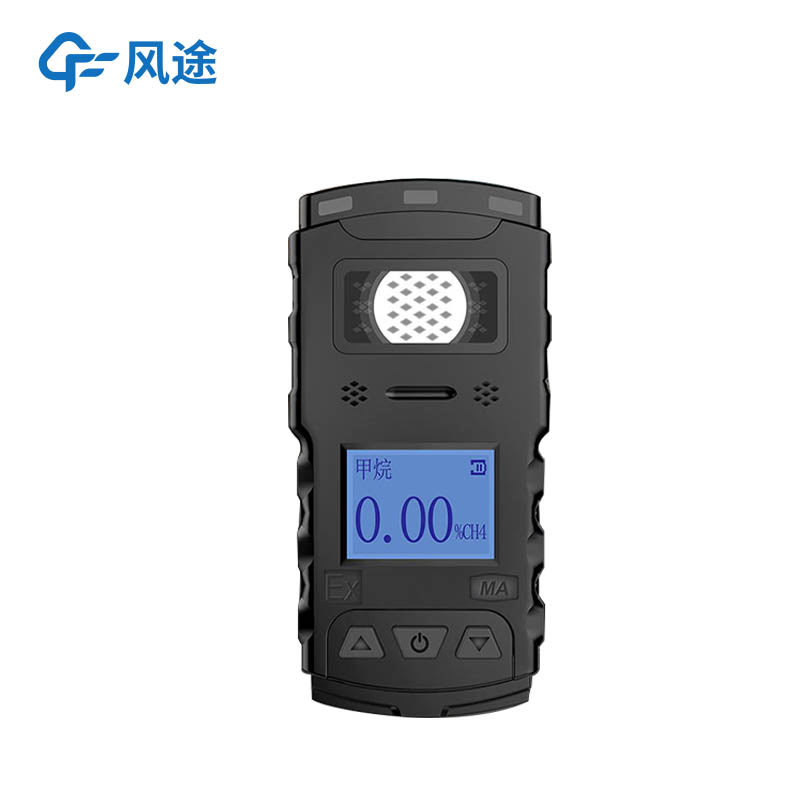
Today, a Toxic gas detector suitable for use in mines is introduced. The model is FT - YDQ1, which can monitor the concentrations of carbon monoxide, oxygen, and nitrogen dioxide gases.
It uses electrochemical sensors. The detection accuracy of carbon monoxide can reach ±1ppm, and that of nitrogen dioxide can reach ±0.1ppm. The protection level is IP65, which can prevent dust and water. It comes with a high - definition screen to display the gas concentration in real - time, which is clear and easy to read. It supports Bluetooth transmission and can quickly transmit data to the equipment of management personnel or the monitoring center. Once the gas exceeds the standard, a loud audible and visual alarm will be immediately issued, and the flashing light is obvious, helping the staff to detect it quickly, reducing the accident risk and safeguarding the safety of the mine.
Meteorological monitors:A weather monitor is usually an automated device used to measure and record environmental weather conditions including temperature, humidity, air pressure, wind speed, wind direction, rainfall, solar radiation and more. They typically consist of multiple sensors, data loggers...
The quality of air directly affects people's lives and health. People can detect changes in air quality through their senses and take appropriate measures accordingly. Clean air helps to improve people's health and quality of life. Therefore, we should pay attention to the air quality proble...
Taking the Dissolved oxygen sensor that measures with the dual-light-source method based on the UV254 absorption method as an example, its measurement principle is based on the ultraviolet absorption method. During operation, the light source inside the instrument emits ultraviolet light, and the li...
sensors in agriculture are used to collect air temperature and humidity, light intensity, carbon dioxide and other sensors in the growing environment of crops such as seedling, growth, harvest, etc. They are an indispensable part of agricultural enterprises....


 Skype
Skype
 whatsapp
 mail
mail