Shandong Fengtu IOT Technology Co., Ltd
Sales Manager:Ms. Emily Wang
Cel,Whatsapp,Wechat:+86 15898932201
Email:info@fengtutec.com
Add:No. 155 Optoelectronic Industry Accelerator, Gaoxin District, Weifang, Shandong, China


Sales Manager:Ms. Emily Wang
Cel,Whatsapp,Wechat:+86 15898932201
Email:info@fengtutec.com
Add:No. 155 Optoelectronic Industry Accelerator, Gaoxin District, Weifang, Shandong, China
time:2026-02-12 09:16:23 source:Weather Station viewed:330 time
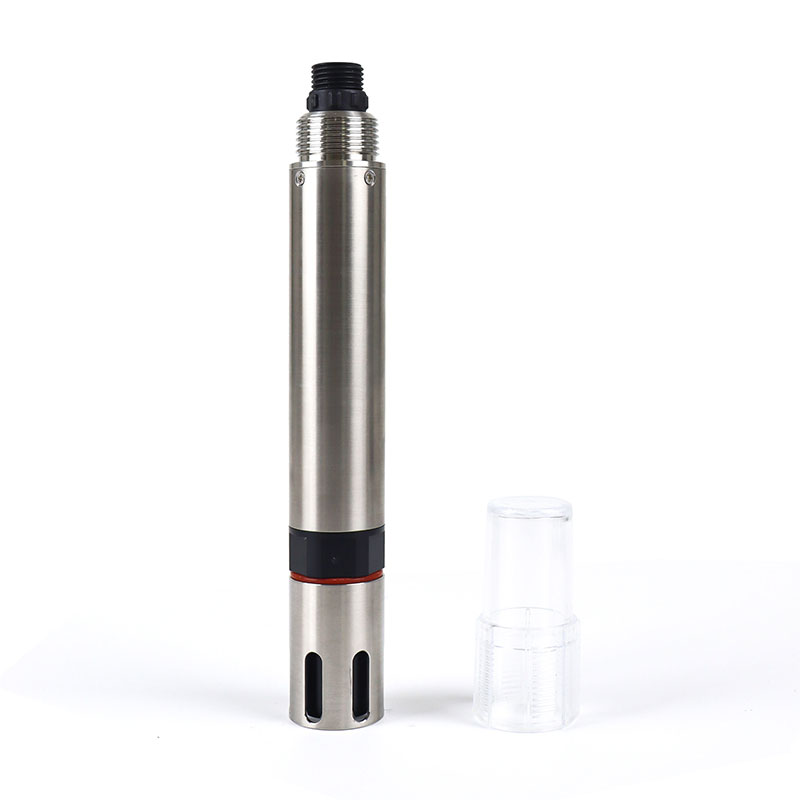
Water Hardness Meter device, based on a PVC membrane calcium-magnesium selective electrode, monitors the total hardness of water in real time, expressed as CaCO3, and features built-in temperature compensation. The equipment is suitable for hardness and alkalinity testing in softeners and boiler water, meeting the continuous monitoring needs of industrial water, surface water, drinking water, and seawater, providing rapid and accurate water hardness data.
Water hardness is a key control indicator in industrial water, boiler feedwater, and drinking water treatment. Traditional hardness testing relies on manual sampling and laboratory titration, a time-consuming process that cannot reflect continuous changes in water quality, making it difficult to meet the real-time control needs of softener regeneration and boiler scale prevention. The Water Hardness Meter device uses a PVC membrane calcium-magnesium selective electrode as its core detection unit, achieving in-situ continuous monitoring of total water hardness, providing quantitative data for water quality management.
The sensor employs ion-selective electrode technology. The PVC sensitive membrane generates a selective potential response to calcium and magnesium ions. The signal is converted by the circuit and outputs a total hardness value, expressed as calcium carbonate (CaCO3) concentration. The electrode structure incorporates a temperature sensor to automatically compensate for the impact of water temperature fluctuations on potential measurements, ensuring data stability under various operating conditions. The measurement process requires no reagent addition, produces no secondary pollution, has a short response time, and can reflect instantaneous water hardness values in real time.
This equipment is primarily used for monitoring softener effluent and boiler feedwater. In softened water systems, the sensor is installed at the outlet of the exchange tank to monitor residual hardness in real time. When the detected value exceeds a set threshold, an alarm is triggered or a regeneration program is initiated to prevent softening failure and scaling in downstream equipment. For industrial boilers, continuous monitoring of feedwater and boiler water hardness can provide early warning of hardness leaks, preventing heat exchange surface deposition and reduced thermal efficiency. Furthermore, the equipment is also suitable for monitoring surface water hardness fluctuations, assessing drinking water sources, and pre-treatment stages in seawater desalination.
The Water Hardness Meter device features a digital output interface, allowing integration into existing water treatment control systems or independent display. The measurement range can be selected according to water quality type, covering low-hardness softened water to medium-hardness surface water. Routine maintenance primarily involves electrode cleaning and periodic calibration; the sensitive membrane replacement cycle depends on water conditions. Compared to laboratory titration, online monitoring eliminates sampling lag and human error, significantly improving the timeliness of hardness control. For systems operating continuously for 24 hours, sensor data supports softener regeneration optimization based on actual load, reducing salt consumption and flushing water volume.
In industrial applications, the equipment is resistant to certain suspended solids and common ion interference, and adapts to pH and temperature changes. Installation methods include flow-through and submersion, selectable based on pipeline pressure and space conditions. Long-term operating data can be stored and analyzed for process adjustments and equipment lifespan assessment. With rising industrial water costs and increasingly stringent emission standards, online water quality monitoring equipment is gradually replacing traditional manual testing methods. Based on the electrode method, combined with temperature compensation and real-time transmission capabilities, Water Hardness Meter provides continuous and traceable data support for water hardness control, suitable for various scenarios from pretreatment to advanced treatment.
With the development of meteorological technology, the role of meteorological stations in disaster prevention and mitigation is becoming more and more important. Weather stations can monitor multiple meteorological elements, which greatly enhances the monitoring and warning capability of catastrophi...
The 5-in-1 Weather Sensor is a compact monitoring device integrating multiple meteorological parameter measurement functions, capable of simultaneously acquiring five core meteorological data: wind speed, wind direction, temperature, humidity, and atmospheric pressure. Through a highly integrated de...
Medical cold storage houses large quantities of pharmaceuticals, which often need to be kept within a specific temperature range to maintain their quality and activity. Because changes in temperature may affect the chemical properties and potency of pharmaceuticals, temperature observations are need...
Environmental Sensors integrates six monitoring functions—temperature, humidity, illumination, PM2.5, PM10, and noise—delivering measurement accuracies of ±0.3°C for temperature, ±3% RH for humidity, and ±1.5 dB for noise. Data for all parameters is output simultaneously via an RS485 int...



 Skype
Skype
 whatsapp
 mail
mail