Shandong Fengtu IOT Technology Co., Ltd
Sales Manager:Ms. Emily Wang
Cel,Whatsapp,Wechat:+86 15898932201
Email:info@fengtutec.com
Add:No. 155 Optoelectronic Industry Accelerator, Gaoxin District, Weifang, Shandong, China


Sales Manager:Ms. Emily Wang
Cel,Whatsapp,Wechat:+86 15898932201
Email:info@fengtutec.com
Add:No. 155 Optoelectronic Industry Accelerator, Gaoxin District, Weifang, Shandong, China

Model:FT-WQX2A2
Brand:fengtu
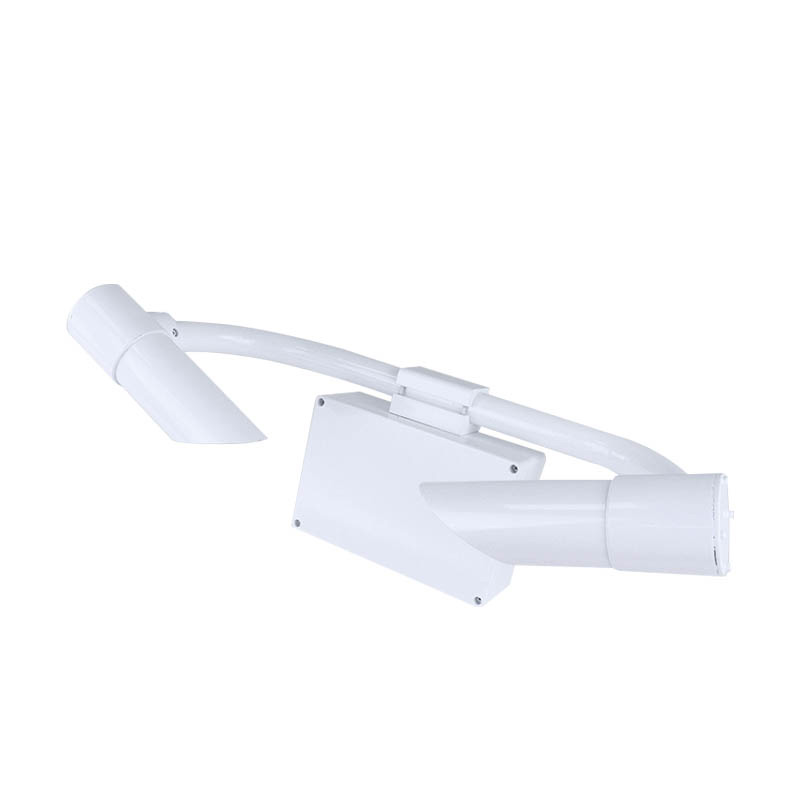
1.2D Ultrasonic Anemometer Product Introduction
2D Ultrasonic Anemometer adopts ultrasonic technology and the principle of time difference method to measure wind speed and direction.FT-WQX2A2 ultrasonic wind speed and direction sensor uses ultrasonic time difference method to measure wind speed and direction.It has high measurement accuracy, reliable performance, easy to carry, no moving parts, uses an integral stainless steel shell, has IP66 protection level, and a very stable structure.(Optional) high-power self-heating module can work normally even in extreme cold and freezing weather at high altitudes.It is a relatively advanced instrument for measuring wind speed and direction.
2.Application fields of 2D Ultrasonic Anemometer
It is widely used in urban environmental monitoring, civil market, wind power generation, meteorological monitoring, ship navigation and drilling operation platform, high-speed railway and highway network, aviation and airport environmental monitoring, subway, tunnel and mining.
3.2D Ultrasonic Anemometer Product Features
1.Stainless steel integrated appearance design, exquisite appearance, using self-developed sensor technology for real-time measurement, no startup wind speed limit, no angle limit, and simultaneously obtain wind speed and wind direction data.
2.Multiple ultrasonic probes send and receive ultrasonic signals in real time within the measurement space to ensure that parameters are real-time and efficient.
3.High measurement accuracy, wide measuring range, good stability, low power consumption, strong anti-external interference ability, can work continuously, not affected by weather changes, and no calibration required.
4.Precision craftsmanship, all-solid-state design, more solid structure, high strength, weather resistance, corrosion resistance and waterproofness, long service life.
5.Professional integrated installation method, compact size, easy to carry and install.
6.An internal heating device can be installed according to the use environment (another optional item), and the maximum heating power can reach 120W
4.2D Ultrasonic Anemometer Technical Specifications
| Wind speed | Measuring range | 0~70 m/s |
| Start wind speed | 0.1m/s | |
| Response time | 1s | |
| Resolution | 0.1m/s | |
| Accuracy | ±0.3m/s or ±3% (0-30m/s, whichever is greater) ±5% (30-70m/s) | |
| wind direction | Measuring range | 0-360° |
| Start wind speed | 0.1m/s | |
| Accuracy | ±2° | |
| Resolution | 0.1° | |
| Heating option | Heating current | 0.6~1A |
| Power consumption | 15~25W | |
| Temperature control range | -30~60℃ | |
| Basic parameters | Digital signal | RS485 4-20mA |
| Baud rate | 9600, 19200, 38400, etc. | |
| voltage | 9~24VDC | |
| Average current | <35mA(12VDC) | |
| Operating temperature | -30~60°C | |
| Working humidity | 0~99%RH | |
| Protection level | IP66 |
In today's society, dust pollution has become a major problem affecting environmental quality and people's living health. It not only deteriorates air quality but also endangers everyone's respiratory health, and may even trigger a series of environmental protection issues and regulatory...
The establishment and use of automatic weather station, Windway Technology automatic weather station is a multi-factor weather station, which can operate normally all day long under unattended and harsh environment. It consists of two major parts: data collection system and communication network, wh...
Soil moisture monitor is an instrument for measuring soil moisture and temperature, which is usually used in agriculture, forestry, geology and other fields. This instrument can automatically monitor the moisture content and temperature of the soil and transmit the data to a computer or mobile phone...
Telemetry terminal is an industrial-grade communication terminal that integrates data acquisition, wireless transmission, and device control functions. It is designed for hydrological monitoring, flood control and early warning, and water resource management. Through real-time data acquisition, processing, and remote transmission, it supports remote telemetry and monitoring applications in various industries, including water conservancy, meteorology, and agriculture....


 Get a Free Quote
 Skype
Skype
 whatsapp
 mail
mail