Shandong Fengtu IOT Technology Co., Ltd
Sales Manager:Ms. Emily Wang
Cel,Whatsapp,Wechat:+86 15898932201
Email:info@fengtutec.com
Add:No. 155 Optoelectronic Industry Accelerator, Gaoxin District, Weifang, Shandong, China


Sales Manager:Ms. Emily Wang
Cel,Whatsapp,Wechat:+86 15898932201
Email:info@fengtutec.com
Add:No. 155 Optoelectronic Industry Accelerator, Gaoxin District, Weifang, Shandong, China
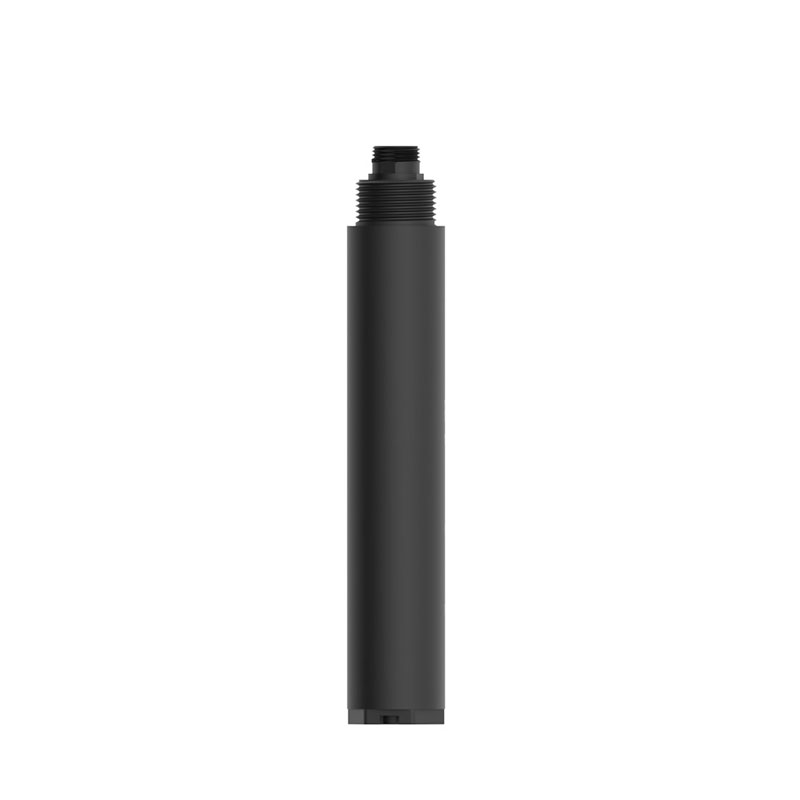
Model:FT-S20
Brand:fengtu
one.Water transparency sensor application environment description
Water transparency sensor calculates the transparency of water by measuring the absorbance of a substance in water to light, and can accurately measure the content of the dissolved substance in the water.Measures transparency in water using the scattering or absorption properties of light. It has high sensitivity, fast response and real-time monitoring capabilities, and is widely used in fields such as water quality monitoring and sewage treatment.
Signal output: RS485 (MODBUS-RTU).
Infrared LED light source, strong anti-interference ability.
Internal signal isolation technology, strong interference resistance.
Good reproducibility, thermal stability, low drift, small size, fast response
Easy and simple installation, 3/4NPT pipe thread, convenient for submersible installation or installation in pipes and tanks
Stable performance and long service life
IP68 waterproof standard
two. Water transparency sensor technical performance and specifications
1.Technical parameters
| Measurement principle | scattered light method |
| Signal mode | RS485 (MODBUS-RTU) |
| Measuring range | 50~1000mm |
| Measurement resolution | 1mm |
| Measurement accuracy | ±5% (depending on sludge homogeneity) |
| Shell material | Glass and ABS |
| Cable length | Standard 5 meters |
| Supply voltage | 12-24VDC (product power consumption is about 0.4W when powered by 12V) |
| Calibration method | Two point calibration |
| Measurement environment | Temperature 0~50℃ (non-freezing), <0.2MPa |
| Waterproof level | IP68 |
| Installation method | Submersible installation, NPT3/4 thread |
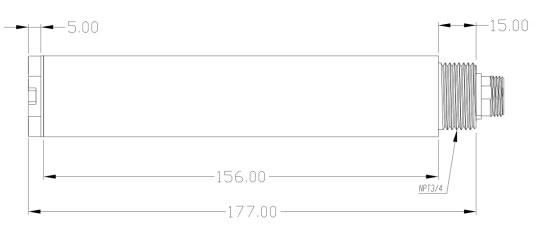
2.Water transparency sensor dimension diagram
three. Water transparency sensor installation and electrical connections
1.Installation
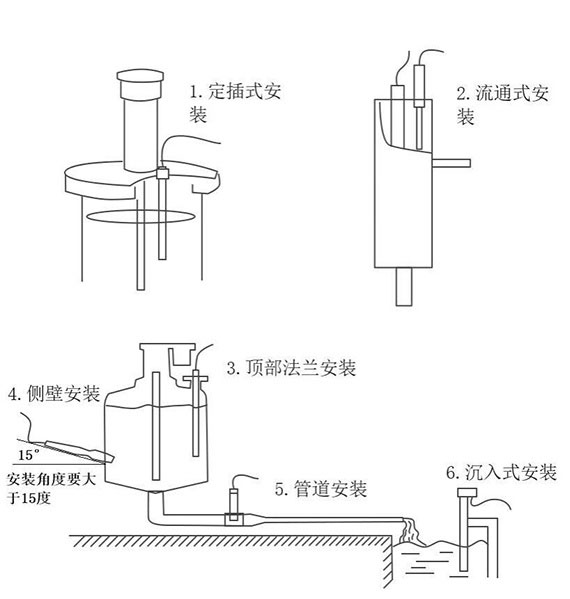
Note: The sensor cannot be installed upside down or horizontally, and must be installed at an angle of at least 15 degrees.
2. Electrical installation
The cable is a 5-core shielded wire, wire sequence definition: brown - power cord (12~24VDC)
Black - Ground (GND)
Blue-485A Green-485B
Yellow-4-20mA current output (can be left floating if not used)
The wiring sequence should be carefully checked before powering on to avoid unnecessary losses caused by wiring errors.
Four. Water transparency sensor maintenance and care
1.Use and maintenance
Conventional electrodes require periodic cleaning and calibration, and the maintenance cycle is determined by the customer based on his or her own working conditions. Conventional electrode cleaning method: use a soft brush to remove attachments (be careful to avoid scratching the electrode surface), then clean with distilled water, and then perform calibration operations.
In the context of rapid industrialization and urbanization, air pollution has become an increasingly severe issue and a global focus. Among the main air pollutants, the "four gases" (sulfur dioxide, nitrogen dioxide, carbon monoxide, ozone) and "two dusts" (PM2.5, PM10) pose sign...
The river water level and rainfall monitoring system is based on the Internet of Things technology, combined with meteorological data and other relevant parameters to achieve real-time observation and management of river flow. It is mainly used in flood control, flood prevention early warning and wa...
The working principles of dust detectors are mainly divided into two types: diffusion type and pump suction type, and users can choose according to actual usage scenarios and monitoring needs.Diffusion-type dust detectors utilize laser scattering technology, with a built-in fan to drive air flow and...
A World Health Organization source shows that between 1982 and 1983, roughly 100,000 people worldwide suffered from depression because of El Niño events, while the incidence of mental illness rose by 8% and traffic accidents increased by at least 5,000 or more.From this, we can see the effect of we...


 Get a Free Quote
 Skype
Skype
 whatsapp
 mail
mail