Shandong Fengtu IOT Technology Co., Ltd
Sales Manager:Ms. Emily Wang
Cel,Whatsapp,Wechat:+86 15898932201
Email:info@fengtutec.com
Add:No. 155 Optoelectronic Industry Accelerator, Gaoxin District, Weifang, Shandong, China


Sales Manager:Ms. Emily Wang
Cel,Whatsapp,Wechat:+86 15898932201
Email:info@fengtutec.com
Add:No. 155 Optoelectronic Industry Accelerator, Gaoxin District, Weifang, Shandong, China
time:2022-09-27 17:38:05 source:Weather Station viewed:1129 time
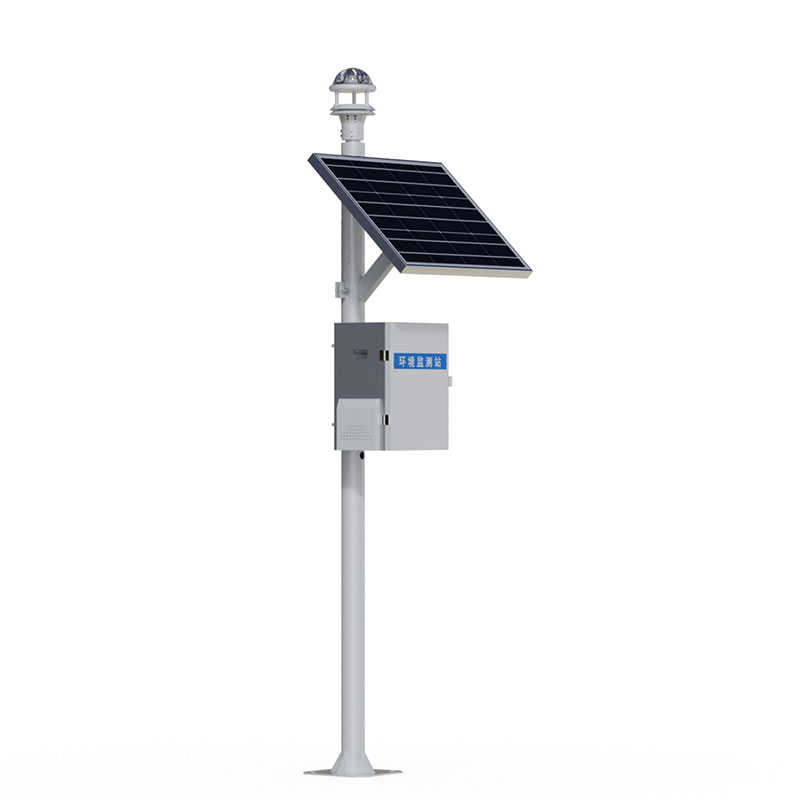
This time, we will focus on the personnel training and equipment management of the air quality monitoring station.
1 Innovate the quality awareness of environmental monitoring and improve the management level
For grass-roots environmental monitoring work, it is necessary to manage and optimize from the awareness, which requires analyzing the existing problems in practical work, and actively preventing and solving them. With the help of the quality supervision and management system under the new situation, the quality management level of the grass-roots monitoring stations will be continuously improved. Of course, in the process of improving the quality system, it needs the cooperation of local environmental protection bureaus and monitoring stations to continuously establish and improve the organizational structure. At the same time, performance appraisal mechanisms such as quantitative assessment and quality inspection should be established for quality management. In order to ensure that the quality management system is more suitable for the staff, actively mobilize the enthusiasm and initiative of the staff, adhere to the system to manage people, and improve the overall work quality.
2 Actively introduce professional talents and strengthen the training of existing personnel
The grass-roots environmental monitoring work needs to rely on various types of staff to carry out the work. The local professional department should support and encourage it in terms of policies, and local units should create more favorable policy conditions to attract and recruit more professional and formal education professionals to ensure that The quality of personnel at air quality monitoring stations has been improved. For the existing staff, it is necessary to strengthen training and learning, and invite professional technical personnel to organize training and teaching, so that advanced professional knowledge can be mastered by grass-roots staff. Staff themselves should establish a sense of self-learning, constantly learn business skills, actively participate in various learning activities, establish a high sense of responsibility and professional ethics, and continuously improve the quality of grass-roots environmental monitoring work.
3 Improve and optimize the environment of the standardized laboratory
The studio of the air quality monitoring station needs to be strengthened, and the equipment and instruments to the environmental regulations need to be carried out in accordance with the standards. Reasonable distribution is required for each workplace to avoid cross-infection. Each sample should be well stored, and the influencing factors such as humidity and temperature should be strictly controlled. The laboratory as a whole should be kept clean and closed, and ventilation and fire prevention should be strengthened. For instrument management, it is necessary to carry out professional instrument storage work, conduct regular inspections and tests, and deal with problems in a timely manner. If the instrument fails, it should be reported to the superior department for repair. Of course, in terms of business technology, it is necessary to learn new operating technologies to ensure that environmental inspection work is carried out efficiently.
In general, air quality monitoring stations play an important role in environmental protection. In order to improve the quality of environmental monitoring at the grass-roots level, in response to the problems existing in air quality monitoring stations, we should actively adopt innovative environmental monitoring quality awareness, improve management levels and actively introduce professional talents to strengthen Existing personnel training and improvement and optimization of laboratory environment and other measures to improve the quality of environmental monitoring work.

IV curve testing is an important means to evaluate the electrical performance of photovoltaic modules or arrays. By measuring the current of photovoltaic devices at different voltages, the current-voltage (IV) curve is plotted, and key parameters such as short-circuit current, open-circuit voltage,...
best weather device provides real-time weather data, monitors temperature, humidity, barometric pressure, and more, and is a fully functional weather station....
Irrigation channel flow monitoring realizes continuous dynamic monitoring of water flow in irrigation channels through the deployment of various measuring equipment and data collection technologies. Based on flow monitoring data, precise irrigation plans can be formulated by combining indicators suc...
Water regime monitoring system is mainly used for automatic measurement and analysis of water level, flow and water volume in hydrological forecast. It collects and transmits data information through various sensors, converts it into digital signals, and then processes them to obtain corresponding r...


 Skype
Skype
 whatsapp
 mail
mail