Shandong Fengtu IOT Technology Co., Ltd
Sales Manager:Ms. Emily Wang
Cel,Whatsapp,Wechat:+86 15898932201
Email:info@fengtutec.com
Add:No. 155 Optoelectronic Industry Accelerator, Gaoxin District, Weifang, Shandong, China


Sales Manager:Ms. Emily Wang
Cel,Whatsapp,Wechat:+86 15898932201
Email:info@fengtutec.com
Add:No. 155 Optoelectronic Industry Accelerator, Gaoxin District, Weifang, Shandong, China
time:2025-03-31 09:30:56 source:Weather Station viewed:857 time
Large-scale ground photovoltaic power stations are characterized by their huge scale, vast land occupation, and heavy inspection tasks. Some ground power stations also face the challenge of complex geographical environments, such as floating solar power stations on water surfaces and mountainous power stations. These power stations have complex and rugged terrains, inconvenient transportation, and scattered arrays. In such large power stations, there are a large number of components. Each solar panel and connection point may have faults, and component failures are one of the main reasons for the gradual decline in photovoltaic power generation.
In the photovoltaic area, there are various risks, including loose or disconnected connectors, unreasonable cable laying, decreased insulation performance, grounding faults, component mismatch, and component shading. These problems impose a heavy burden on the operation and maintenance work. In the traditional operation and maintenance mode, only after an alarm signal appears can the operation and maintenance personnel conduct offline and on-site inspections by carrying equipment, and rely on manual work to output reports and propose solutions. This method is time-consuming and labor-intensive, and the results vary greatly. Moreover, operation and maintenance personnel can only receive information and deal with problems when the faults have already occurred or the components have been damaged. If problems can be detected and solved in the early stage of component failures, it can not only reduce the workload of operation and maintenance but also lower the component damage rate, save operation and maintenance costs, and increase the revenue of the power station.
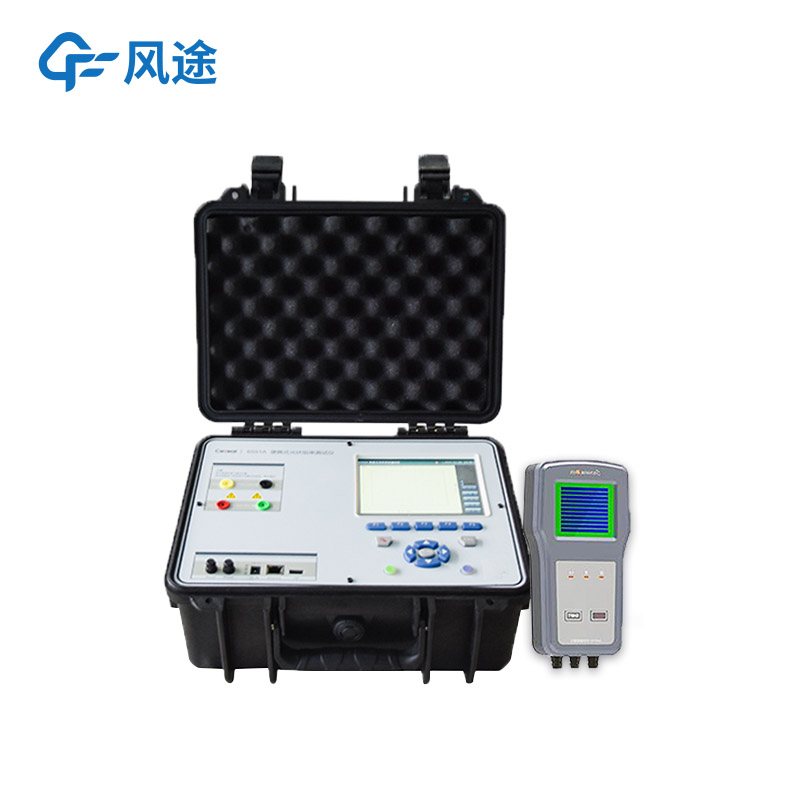
The emergence of the Portable IV Curve Tester has changed the traditional sampling inspection method. It can conduct 100% inspection and diagnosis of photovoltaic components and automatically generate reports. It can accurately detect up to about 30 types of faults. The entire inspection process is carried out remotely without the need for on-site manual inspection. Compared with the traditional method, the Portable IV Curve Tester can detect more problems, and even solve potential problems in advance, reducing the component failure rate and ensuring the healthy operation of the power station.
The monitoring of rainfall and water levels is crucial for flood prevention and disaster mitigation, water resources management, and urban drainage. Timely understanding of changes in rainfall and water levels can effectively prevent disasters such as floods and mountain torrents, ensuring the safet...
Waterlogging monitors are usually installed in areas of the city that are prone to waterlogging, such as low-lying areas, underground passages, and under overpasses. It acts as a "data collector", using high-precision water level sensors and other equipment to accurately collect key data s...
Precipitation, as a phenomenon in which liquid or solid water falls to the ground after atmospheric water vapor condenses, includes rain and snow. It is generated by atmospheric circulation disturbances and is a key part of the Earth's water cycle. It is also the only way for terrestrial organis...
Moisture monitoring is the process of monitoring soil moisture in real time. This can be achieved by means of fixed automatic soil moisture monitoring stations (soil moisture monitors). This type of monitoring station can monitor soil moisture automatically, continuously and in real time, providing...


 Skype
Skype
 whatsapp
 mail
mail