Shandong Fengtu IOT Technology Co., Ltd
Sales Manager:Ms. Emily Wang
Cel,Whatsapp,Wechat:+86 15898932201
Email:info@fengtutec.com
Add:No. 155 Optoelectronic Industry Accelerator, Gaoxin District, Weifang, Shandong, China


Sales Manager:Ms. Emily Wang
Cel,Whatsapp,Wechat:+86 15898932201
Email:info@fengtutec.com
Add:No. 155 Optoelectronic Industry Accelerator, Gaoxin District, Weifang, Shandong, China
time:2025-02-06 11:42:02 source:Weather Station viewed:684 time
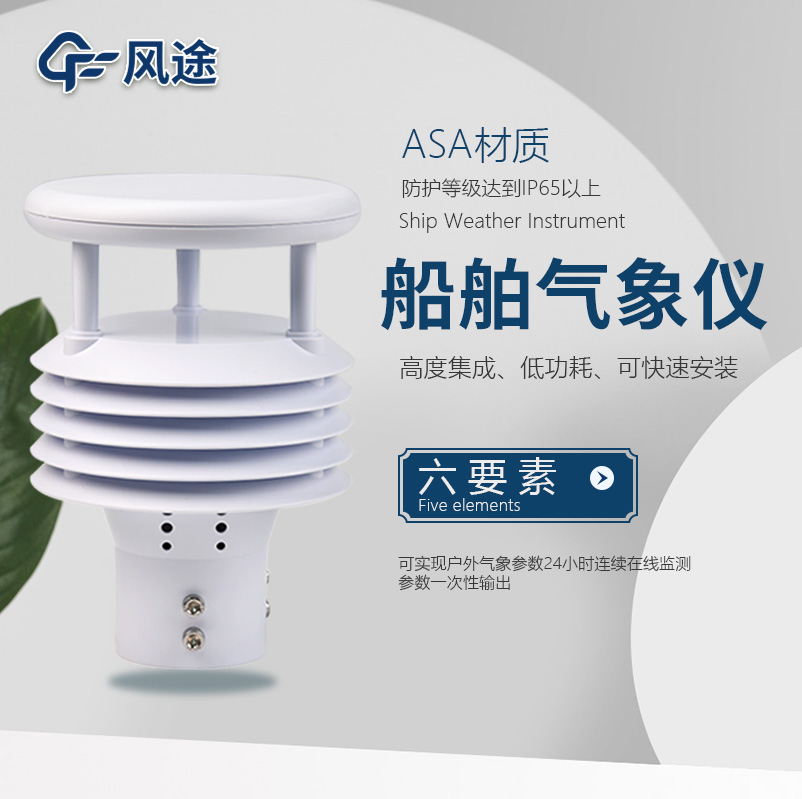
Accurate meteorological information is crucial for ocean voyages. The Shipborne Meteorological Instrument FT - Y6 is a professional device designed specifically for marine meteorological monitoring.
Developed and produced by Fengtu Internet of Things Technology Co., Ltd., its working principle is to transmit continuous variable - frequency ultrasonic signals and measure the relative phase to detect wind speed and direction. This effectively overcomes the need for high - precision timers and the measurement inaccuracies caused by sensor start - up delay, demodulation circuit delay, and temperature changes.
It can achieve six - element integrated monitoring, conducting one - stop monitoring of ambient temperature, relative humidity, wind speed, wind direction, atmospheric pressure, and piezoelectric rainfall. It records data online 24 hours a day and outputs parameters at one time through a digital communication interface. It has an excellent anti - interference design. The hidden ultrasonic probes on the top cover prevent the accumulation of rain and snow and blockage by natural wind. There are also watchdog circuits and an automatic reset function to ensure the stability of the system. Installation and maintenance are very convenient. The snap - on probe design solves the problem of loosening during transportation and installation. It is highly integrated, has no moving parts, and zero wear, eliminating the need for on - site calibration. The material is ASA engineering plastic, which is durable. It has a variety of communication interfaces, with an RS485 communication interface as the standard configuration, and can also be optionally equipped with 232, USB, Ethernet interfaces, or a wireless transmission module according to needs.
In terms of technical parameters, the wind speed measurement range is 0 - 60m/s, with an accuracy of up to ±0.1m/s; the wind direction measurement range is 0 - 360°, with an accuracy of ±2°; the air temperature measurement range is - 40 - 60℃, with an accuracy of ±0.3℃; the air humidity measurement range is 0 - 100% RH, with an accuracy of ±3% RH; the atmospheric pressure measurement range is 300 - 1100hpa, with an accuracy of ±0.25%; the piezoelectric rainfall measurement range is 0 - 4mm/min, with an accuracy of ±4%; and the power is only 1.08W.
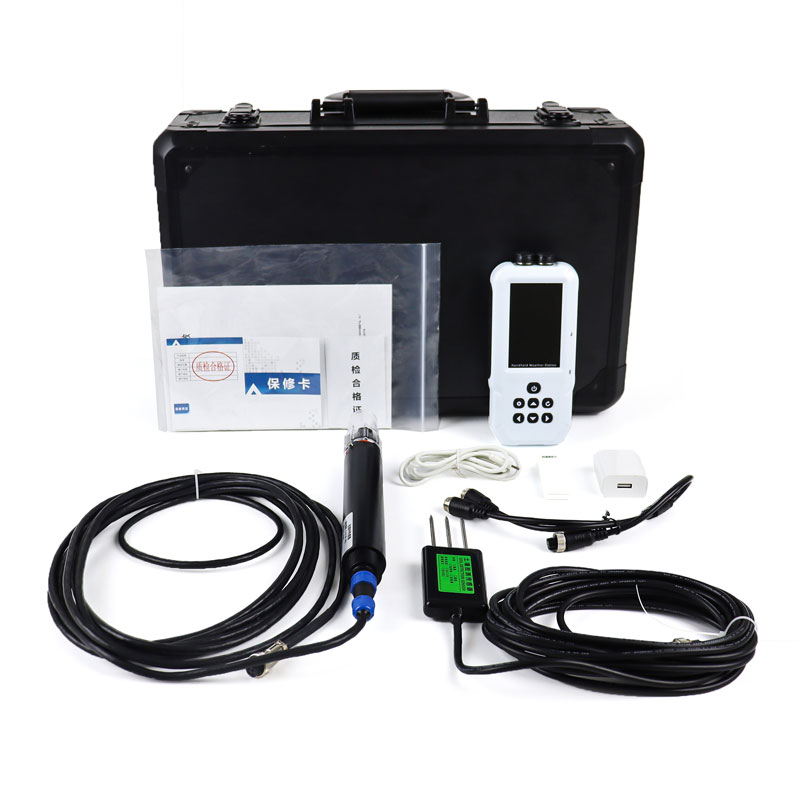
The electronic weather instrument is a portable device that integrates multiple meteorological data, including wind speed, wind direction, temperature, humidity, atmospheric pressure, altitude, thermal index, wet-bulb temperature, wave height, dew point temperature, wind chill index, and GNSS positioning. This highly integrated instrument is widely used in environmental monitoring, meteorological research, third-party testing, and emergency response, providing accurate meteorological data support....
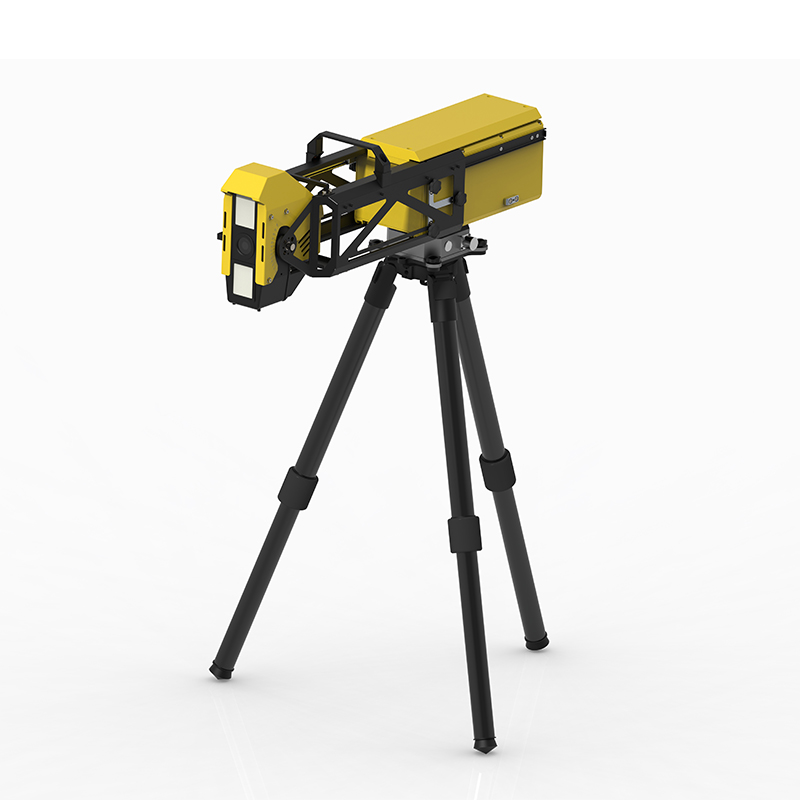
Universal GNSS monitoring equipment employs differential RTK technology to achieve millimeter-level displacement monitoring. It is widely applicable across engineering fields—including dam safety monitoring, bridge structural health assessment, and landslide early warning systems—and feature...
Which is the best manufacturer of river water level real-time monitoring system? Shandong Fengtuo Technology is a high-tech enterprise specializing in the research and development, production and sales of river water level real-time monitoring system. The company has a wealth of experience in produc...
-- Preface --Why do humans measure wind speed and direction? In fact, it has a long history.From the ancient Chinese Xiangfeng Tongwu to the ancient Greek wind vane, although these ancient wind measurement methods were not as accurate and comprehensive as modern measurement techniques, they were an...


 Skype
Skype
 whatsapp
 mail
mail