Shandong Fengtu IOT Technology Co., Ltd
Sales Manager:Ms. Emily Wang
Cel,Whatsapp,Wechat:+86 15898932201
Email:info@fengtutec.com
Add:No. 155 Optoelectronic Industry Accelerator, Gaoxin District, Weifang, Shandong, China


Sales Manager:Ms. Emily Wang
Cel,Whatsapp,Wechat:+86 15898932201
Email:info@fengtutec.com
Add:No. 155 Optoelectronic Industry Accelerator, Gaoxin District, Weifang, Shandong, China

Model:FT-MQ1
Brand:fengtu
1.Introduction to Crop Growth Monitoring
Using the Internet of Things technology, Crop Growth Monitoring of soil moisture, insects, weather, seedling during the growth of crops.Crop Growth Monitoring refers to the automatic monitoring system for real-time video monitoring of crop growth and development status, pest and disease conditions, and disasters (including daytime images and nighttime infrared images).Combined with meteorological, soil moisture sensors and insect situation forecast lights, automatic monitoring of field seedlings, insect situations and disaster situations can be achieved, so that managers can remotely pay attention to crop growth conditions and guide irrigation, fertilization, spraying and other measures according to the needs of crops in different growth cycles.
2.Crop Growth Monitoring System Component
The system consists of three-meter carbon steel bracket, HK1 Hikvision camera, solar power supply system (including protective box), and cloud platform
3.Crop Growth Monitoring Technical Parameters
1.The maximum resolution can reach 2560×1440 25fps, and real-time images can be output at this resolution
2.Supports 120dB wide dynamics, backlight compensation, strong light suppression, 3D digital noise reduction, adapts to different monitoring environments
3.Support fluorite platform and Hikvision Internet access
4.Built-in 4G SIM card, supports LTE-TDD/LTE-FDD/CDMA 4G wireless network transmission, external dual antenna
5.Supports white light/infrared double fill light, the infrared can reach up to 30m, and the white light can reach up to 30m
6.Built-in 1 microphone and 1 speaker, supporting two-way voice intercom
7.Support MicroSD/MicroSDHC/MicroSDXC cards, up to 256GB
8.Complies with IP66 dust-proof and waterproof design, strong anti-interference ability
9.Built-in Telecom 4G IoT card, does not support plug-in and unplug replacement
4.Crop Growth Monitoring Cloud Platform
1.CS architecture software platform, supports direct observation of mobile phones and PC browsers without additional software installation.
2.Support multiple accounts and multiple devices to log in
3.Support real-time data display and historical data display dashboard
4.Cloud server and cloud data storage are stable and reliable, easy to expand, and load balancing.
5.Support SMS alarm and threshold settings
6.Support map display and viewing device information.
7.Support data curve analysis
8.Support data export table form
9.Supports data forwarding, HJ-212 protocol, TCP forwarding, http protocol, etc.
10.Support data post-processing function
11.Support external running of javascript scripts
Wireless level monitoring in wastewater treatment plants, is radar level meter feasible?To treat wastewater, it needs to go through a variety of processes, and this will involve the measurement of liquid level, flow, pressure, temperature, ph, dissolved oxygen, turbidity and other parameters, among...
Meteorological monitors:A weather monitor is usually an automated device used to measure and record environmental weather conditions including temperature, humidity, air pressure, wind speed, wind direction, rainfall, solar radiation and more. They typically consist of multiple sensors, data loggers...
The negative oxygen ion monitoring system is a monitoring station that automatically collects air cleanliness index data in tourist scenic spots and ecological parks (such as artificial wetlands, ecological scenic spots, botanical gardens, etc.). ).Monitor the negative oxygen ions, temperature, humidity, PM2.5 and other environmental quality parameters in scenic spots....
Micrometeorology is a subtle change in climate caused by factors such as small-scale topography, such as localised wind, fog and frost. In certain sections of transmission lines, these micrometeorological phenomena may be exacerbated by topographical influences, for example, leading to conductor ice...


 Get a Free Quote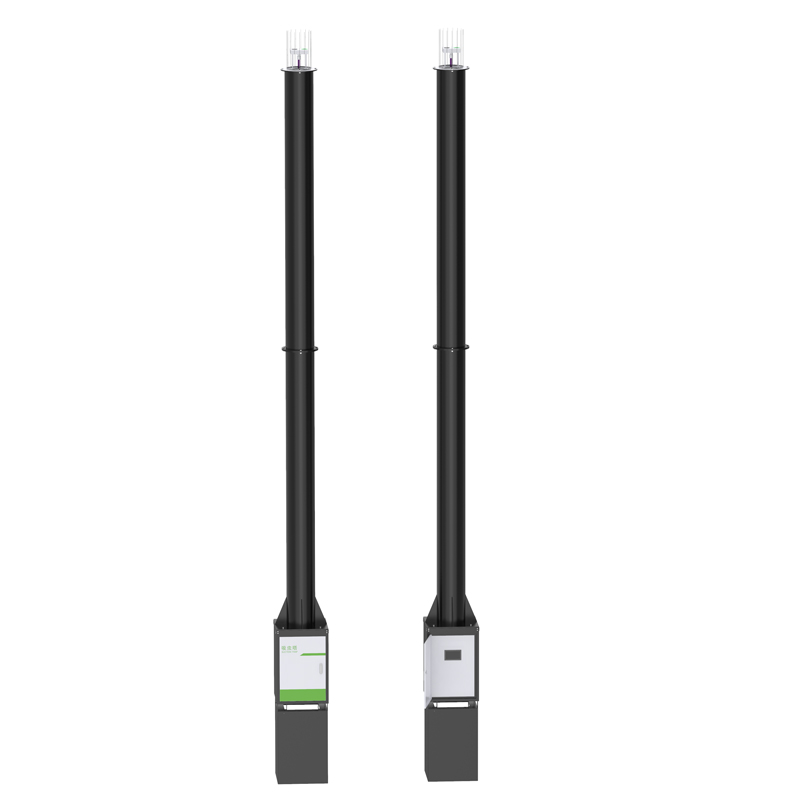
 Skype
Skype
 whatsapp
 mail
mail