Shandong Fengtu IOT Technology Co., Ltd
Sales Manager:Ms. Emily Wang
Cel,Whatsapp,Wechat:+86 15898932201
Email:info@fengtutec.com
Add:No. 155 Optoelectronic Industry Accelerator, Gaoxin District, Weifang, Shandong, China


Sales Manager:Ms. Emily Wang
Cel,Whatsapp,Wechat:+86 15898932201
Email:info@fengtutec.com
Add:No. 155 Optoelectronic Industry Accelerator, Gaoxin District, Weifang, Shandong, China
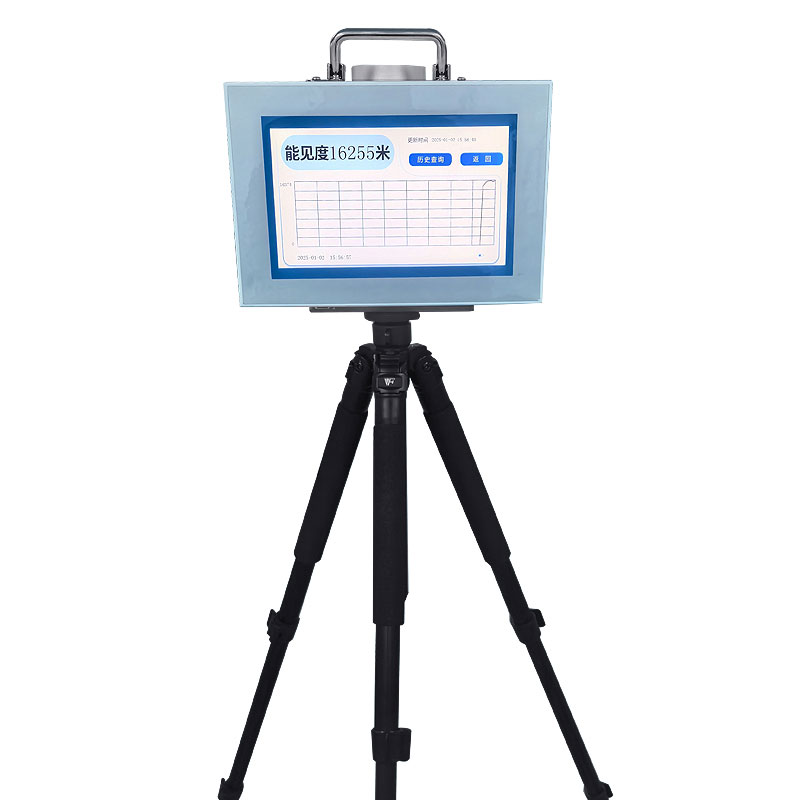
Model:FT-BN10
Brand:fengtu
1、Portable visibility Sensor Product Introduction
Portable visibility Sensor measures and displays the current visibility value in real time, making it ideal for use outdoors, on the move, or in confined Spaces.BN10 Portable visibility Sensor uses the forward scattering method to measure the total extinction coefficient of air and calculate current visibility.It is widely used in emergency response, road traffic, and meteorological scenarios.
2、Portable visibility Sensor Technical Features
1.Integrated portable design, lightweight, easy to carry, and ready to use immediately;
2.10.1-inch high-brightness touchscreen displays real-time data and historical curves;
3.Built-in large-capacity SD card (8GB) for real-time data storage, query support, and export support;
4.Built-in large-capacity lithium battery for convenient outdoor emergency use;
5.The instrument's housing is made of high-quality aluminum, offering excellent waterproof, dustproof, and impact resistance;
6.Built-in watchdog circuit ensures reliable and stable operation for extended periods of outdoor operation;
7.The instrument's communication and power ports are both lightning-proof, minimizing damage from lightning strikes and static electricity;
8.24V power supply, low power consumption, and long-term power supply;
9.The digital interface uses RS232 for active upload, requiring no protocol adaptation.
3、Portable visibility Sensor Implementation Standards
QX/T 536-2020 Test Method for Forward Scatter Visibility Meters
4、Portable visibility Sensor Technical Parameters
| Main parameters | Parameter range | Resolution | Error | |
| Range | BN10 | 10km☆ | 1m | ≤2km ±2%; 2km~10km ±5%; >10km ±10% |
| BN20 | 20km☆ | |||
| Repeatability | ≤4% | |||
| Working temperature | -20~60℃ | |||
| Working humidity | 0~100%RH | |||
| Work power (adapter) | 100-240V input; 24V output; 2.5A | |||
| Power consumption | <10W | |||
| Battery capacity | 6.6AH | |||
| Working hours | ≥12h | |||
| Size | 300x150x220mm(length x width x height) | |||
| Weight | ≤10kg | |||
Soil moisture monitoring techniques fall into three main categories: direct measurements, matrix potential measurements and non-contact indirect measurements.Direct measurements: moisture content is calculated by weighing and drying soil samples, or measured directly using instruments such as neutro...
Float-type and pressure-type sensors are prone to being affected by water flow scouring, sediment deposition, water quality corrosion, and floating debris impacts, leading to reduced measurement accuracy, equipment damage, and difficulty in stable operation under severe weather conditions. However,...
Soil moisture monitoring equipment is equipped with a variety of sensors capable of measuring key parameters such as soil temperature, humidity, electrical conductivity (EC), nitrogen, phosphorus and potassium content as well as pH. By arranging these sensors in a hierarchical manner, soil propertie...
non contact level sensor uses pulse radar for liquids to accurately record levels in liquid media reliably and accurately....


 Get a Free Quote
 Skype
Skype
 whatsapp
 mail
mail